
SciMed Education
Halogen and Sulfur Determination in Environmental Solids
(DIN EN 17813)
Summary
This method uses high-temperature pyrohydrolysis with water dosing to convert all fluorine, chlorine, bromine and sulfur in solid waste samples into measurable ions. The combustion gases are absorbed and then analyzed (typically by ion chromatography), helping protect energy/recycling plants from corrosive gases (HF, HCl, SO₂) and aiding waste classification.
What is DIN EN 17813?
DIN EN 17813 is a standard method for measuring the total fluorine, chlorine, bromine and sulfur content in solid environmental samples. It applies to diverse materials such as plastic waste, secondary fuels, wood waste, soils and other wastes. The standard specifies oxidative pyrohydrolytic combustion of the sample (around 1050 °C) with controlled water addition, followed by ion chromatography (IC) to detect the resulting halide and sulfate ions.
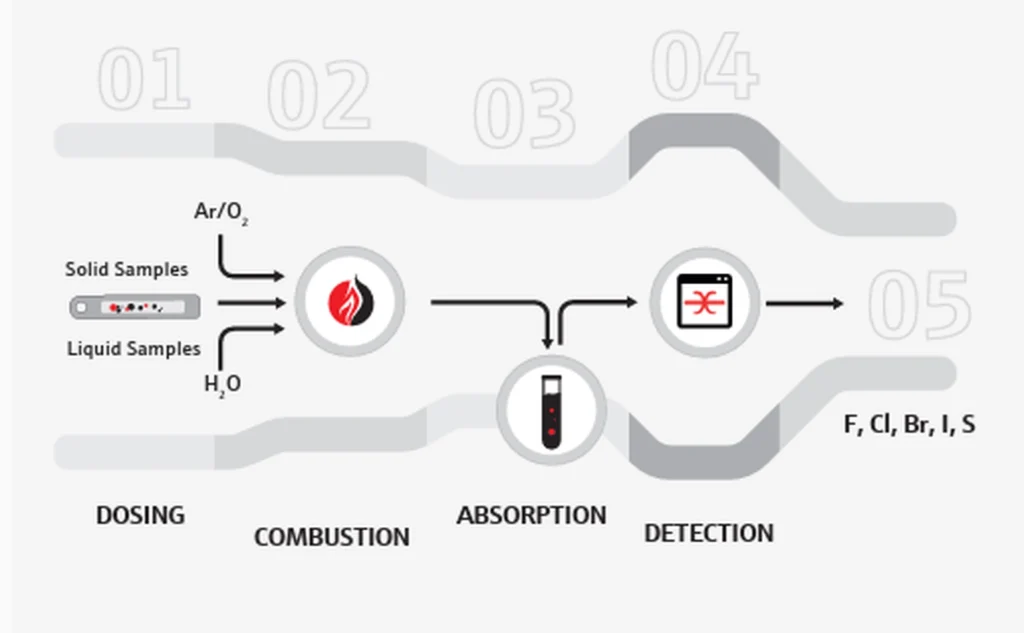
Why measure halogens and sulfur in waste solids using DIN EN 17813
Analysing halogens and sulfur in wastes is important because burning or processing these materials can release aggressive, corrosive gases like HF, HCl and SO₂. Such gases can damage equipment and harm the environment. Monitoring total fluorine, chlorine, bromine and sulfur helps protect plants (by corrosion control) and assists in proper waste evaluation and classification (for example, during recycling or landfilling).
How are halogens and sulfur determined using DIN EN 17813?
According to the standard, the solid sample is combusted in a two-step oxidative process (pyrohydrolysis) at about 1,050 °C. During combustion, a constant stream of water vapor is added to the oxygen carrier gas. This water dosing is crucial to convert volatile fluoride into HF and to ensure all halogen and sulfur compounds are fully converted and captured.
The combustion gases (e.g. HF, HCl, Br₂, SO₂) are collected in an aqueous absorbent solution. For bromine and sulfur determination, hydrogen peroxide is often added to the absorber to fully oxidize those elements. Finally, the enriched solution is made up to volume and injected into an ion chromatograph or equivalent detector to quantify F⁻, Cl⁻, Br⁻ and SO₄²⁻.
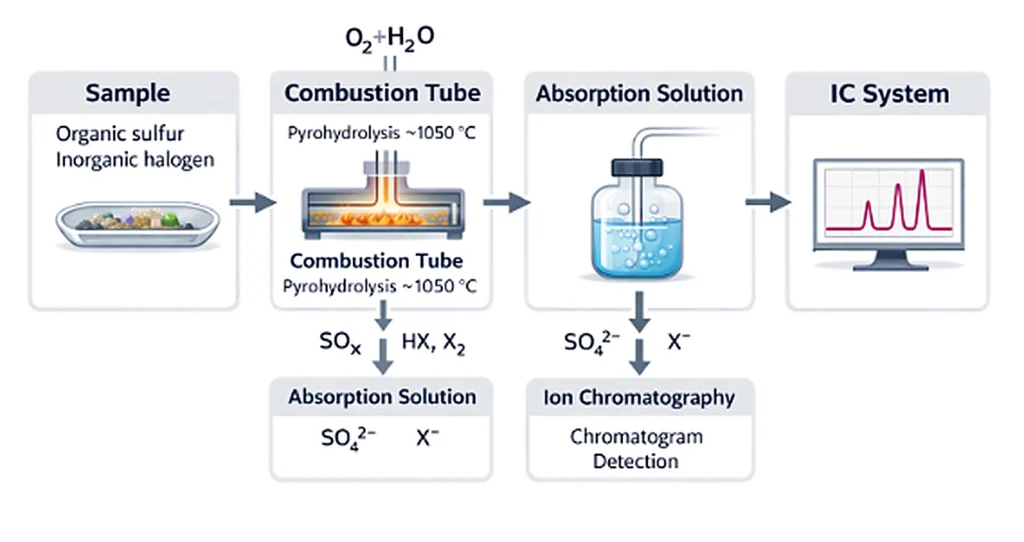
What equipment and instruments are required to measure halogens and sulfur in waste solids using DIN EN 17813?
The method requires a high-temperature combustion furnace (pyrolysis unit) capable of 1000–1100 °C with controlled water injection and gas absorption. In practice, a system like the ICprep automatic provides this: it feeds solid samples into a furnace, adds water vapor, combusts the sample, and absorbs the combustion gases into solution. An ion chromatograph with an anion separation column and conductivity detector is used to measure the halide and sulfate ions in the absorbent. Separating the digestion (ICprep) and detection (IC) steps allows flexible operation: for example, a lab can digest several samples and then run them on an existing IC instrument without needing a dedicated combustion-IC analyzer.
How are samples prepared for the analysis of halogens and sulfur in waste solids using DIN EN 17813?
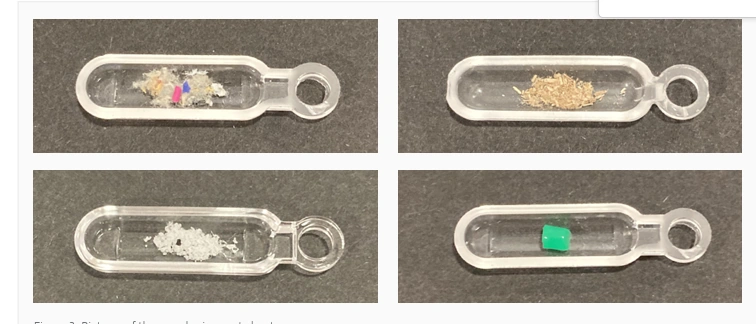
Solid samples (e.g. plastic waste, solid recovered fuel, wood waste) are first dried (typically at ~105 °C for several hours) and then finely weighed into sample boats. In the example study, 10–30 mg of each dried sample was placed in a quartz boat. Certified reference materials (e.g. LDPE pellets with known Cl, Br, S; coal fly ash with known F, Cl) are run as controls. The sample boats are then automatically introduced into the furnace (often by an autosampler with an Automatic Boat Drive) for the controlled two-phase combustion.
What were the results and how reliable is the DIN EN 17813 method for the analysis of halogens and sulfur in waste solids?
Blank (empty) runs showed no detectable halogens or sulfur, indicating no contamination. Certified standards gave excellent recoveries: measured values were 96–103% of certified values. This meets the DIN EN 17813 requirement that recoveries be within 90–110%. These results confirm that the ICprep digestion fully converts and captures the halogens and sulfur. The study noted that inhomogeneous samples (e.g. heterogeneous waste) can affect precision; indeed, the standard suggests grinding solids to below 125 μm (for <50 mg samples) to improve repeatability.
What are the advantages of this ICprep digestion for the analysis of halogens and sulfur in waste solids using DIN EN 17813?
Using a dedicated pyrohydrolytic digester like ICprep makes the analysis easy, fast and reliable. It allows smaller labs (with low sample loads) to analyze halogens and sulfur without buying an expensive combined CIC instrument. An existing ion chromatograph can be used to analyze the digest solutions at any time, increasing equipment utilization.
In addition, other combustion analyzers (such as the multi X 2500 or multi EA series) can be equipped with a pyrolysis kit to perform the same digestion, extending their functionality to include F, Cl, Br and S. For samples containing high levels of alkali metals, ICprep even supports a ceramic combustion tube to avoid contamination. Overall, the approach streamlines sample prep for environmental solid analysis while ensuring accurate results.
What to do next?
Explore the ICprep system featured in this application and see how it supports reliable sample preparation in accordance with DIN EN 17813. For further information on the system, its capabilities and how it can be implemented in your laboratory workflow, visit the link below or speak with a SciMed product manager for expert guidance.
Page FAQ's
It is high-temperature oxidative combustion of a sample in the presence of water vapor (pyrohydrolysis). In practice, the sample is burned at around 1050 °C with water added to the oxygen stream, converting all halogens and sulfur to volatile products (e.g. HF, HCl, SO₂) for capture.
Water injection ensures complete conversion of fluorine (and other elements) into volatile forms. The standard notes that controlled water dosing during combustion is crucial for full conversion of analytes and loss-free transfer into the absorber.
This method measures the total fluorine, chlorine, bromine (and typically iodine) and sulfur content of solid samples. These are captured as their halide ions (F⁻, Cl⁻, Br⁻) and sulfate (SO₄²⁻) in the absorbent.
A high-temperature furnace with water dosing and an absorber (such as the ICprep pyrohydrolysis system) is required, along with an ion chromatograph for detection. The furnace must operate at 1000–1100 °C with water injection to follow DIN EN 17813.
Testing with certified reference materials yielded recoveries of about 96–103% for all elements, which meets the DIN EN 17813 acceptance range of 90–110%. These high recoveries demonstrate that the digestion and analysis are accurate and reproducible under the standard conditions.
Contact Us Today
We take great pleasure in assisting you and ensuring you get a prompt response to your questions
Live chat opening hours Mon – Fri 9:15 to 16:30 (UK Time)