
SciMed Education
Determining Total Organic Carbon (TOC) in Agricultural Soils, Dried Manure and Sediments
In Summary
Total organic carbon (TOC) is a key indicator of soil health and fertility. Its concentration reflects the balance between natural organic matter and anthropogenic inputs and plays an important role in soil classification and environmental protection. High‑temperature combustion with non‑dispersive infrared (NDIR) detection provides a precise way to determine TOC in agricultural soils, dried manure and sediments. This page explains how TOC is measured, why it matters and how automated systems help laboratories achieve reliable results.
What Is Total Organic Carbon (TOC) in Agricultural Soil and Why Is It Important?
Carbon in soil originates from both inorganic and organic sources. Total inorganic carbon (TIC) comprises carbonates and hydrogen carbonates that occur naturally or are added as fertiliser. Total organic carbon, by contrast, comes from plant, animal and microbial matter and is essential for soil formation and fertility. Human activities such as industrial pollution or over‑fertilisation can elevate TOC levels. The TOC content influences soil colour, fertility and toxicity and is affected by erosion, biological decomposition and farming practices.
In humus‑rich topsoil, humus typically ranges from 1–8 %, corresponding to a TOC range of 0.5–4 %; thus humus content is roughly twice the TOC concentration. Because TOC directly affects soil quality and classification and has implications for environmental protection, regular monitoring is essential.
How Does the Direct Method Measure TOC in Soils, Manure and Sediment Samples?
Several standard methods (EN 13137, DIN EN 15936, ISO 10694) use high‑temperature combustion followed by NDIR detection to determine TOC. The differential method measures total carbon (TC) and TIC separately and calculates TOC by subtraction, whereas the direct method removes TIC before combustion and measures TOC directly.
For samples with high TIC and low TOC content, the direct method improves accuracy and sample throughput because only one measurement is required. In practice, TIC is eliminated by adding a non‑oxidative acid. Soil, manure and sediment samples are weighed into ceramic boats and acidified with 500 µL of 10 % hydrochloric acid; additional 25 % HCl is added in 50 µL increments until carbonate evolution stops.
The acidified samples are placed on a heating plate at 40 °C and dried overnight. The dried residues are then combusted at 1,200 °C in a ceramic combustion tube under pure oxygen, and the resulting CO₂ is detected by an NDIR detector. This catalyst‑free high‑temperature combustion achieves quantitative oxidation of carbon compounds and avoids the need to subtract large TIC values from TC.
How Are Samples Prepared for Total Organic Carbon Determination?
Reliable TOC analysis begins with proper sample preparation. Soil, manure and sediment should be dried and ground so that the grain size is less than 2 mm.
After grinding, samples are weighed directly into ceramic boats and acidified to remove carbonates and hydrogen carbonates. Drying at 40 °C for at least 12 h ensures that moisture and volatile acids are removed before combustion.
The preparation steps can be performed in batches to reduce handling time, and dried samples remain stable until analysis.
What Calibration and Instrumentation Support Accurate TOC Analysis?
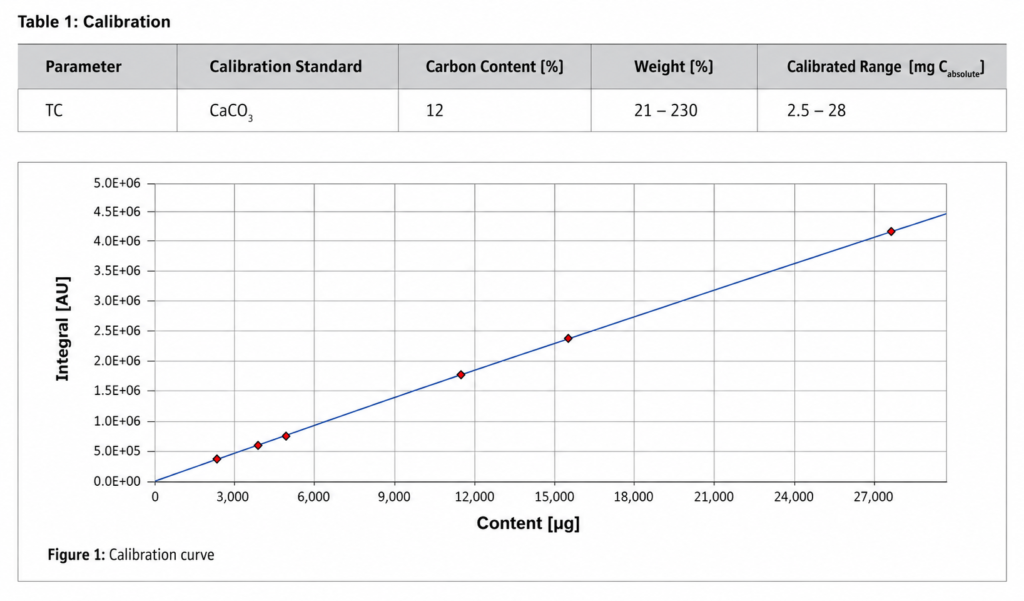
To establish a calibration curve covering a broad concentration range, the TOC analyser is calibrated with a single standard such as calcium carbonate (CaCO₃). Different quantities of CaCO₃ (12 % carbon) are weighed (around 20 mg and above) directly into ceramic boats and combusted.
This approach enables a calibration range from 2.5 mg to 28 mg absolute carbon and simplifies calibration routines. The instrumentation used for TOC determination includes a robust ceramic combustion tube resistant to high concentrations of alkali and alkaline earth metals. Combustion temperatures reach 1,300 °C in multi N/C configurations and 1,500 °C in multi EA 4000 systems, ensuring complete digestion of all carbon compounds.
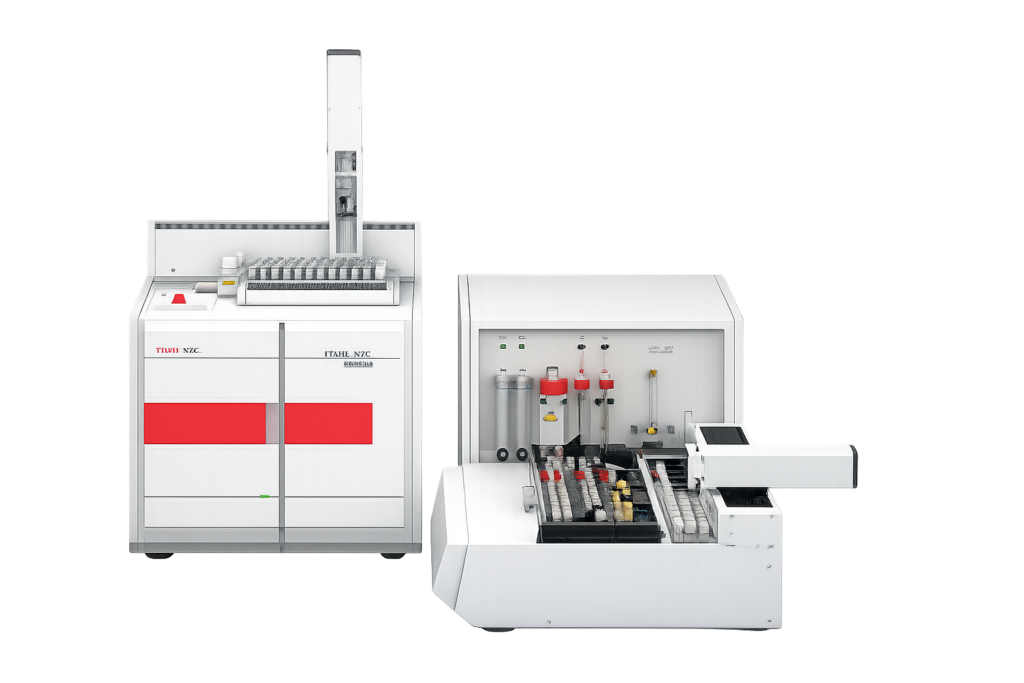
Soil samples are not very reactive, so sophisticated settings such as slow introduction speeds or hold positions are unnecessary. Instrument configurations range from automated multi N/C 3300 duo systems with an AS vario ER autosampler and HT 1300 furnace for direct TOC determination to manual multi N/C 2300S setups and multi EA 4000 combinations that can also measure total sulphur and total chlorine. All configurations employ a wide‑range NDIR detector for CO₂ measurement and support TOC, TIC and TC determinations in liquids as well as solids.
What Were the Results of TOC Measurements in Soil, Manure and Sediment Samples?
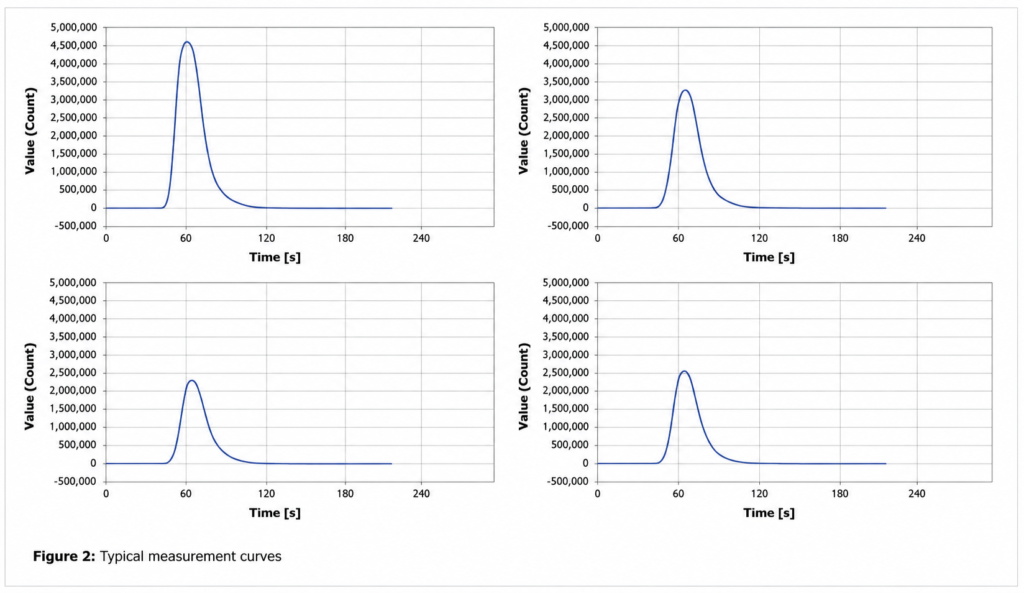
The application measured dried manure, two agricultural soils, a sediment sample and a certified reference soil. Samples were analysed in triplicate, and standard deviations were low, indicating good precision.
Dried manure (≈100 mg sample weight) contained an average of 33.1 % TOC with a relative standard deviation (RSD) of 1.1 %. Soil A (≈200 mg) had 2.35 % TOC with an RSD of 1.3 %. Soil B (≈300 mg) showed 1.62 % TOC with an RSD of 1.8 %. The sediment sample (≈300 mg) contained 1.32 % TOC with an RSD of 1.5 %.
The certified reference material (CRM) with 1.8 % TOC yielded 1.85 % ± 0.03 % TOC and an RSD of 1.6 %, demonstrating the method’s accuracy. These results confirm that the direct method delivers reliable data across a wide range of carbon concentrations.
How Do Automated Multi N/C Duo Systems Benefit TOC Determination?
Automated multi N/C duo systems are well suited for analysing agricultural soils and related matrices using the direct TOC method. Because soils and sediments are relatively homogeneous, sample weights between 100 mg and 300 mg are sufficient for precise and reproducible results, although up to 3 g can be used for inhomogeneous samples or very low carbon concentrations.
Manual acidification and drying can be performed in batches to minimise preparation time, after which dried samples are placed on the FPG 48 solids sampler; the analyser can then automatically run a sequence of up to 48 samples.
Simple calibration routines and a wide‑range NDIR detector enable measurement up to 500 mg absolute carbon, reducing the need to repeat analyses when carbon concentrations are unexpectedly high. The multi N/C duo platform is flexible: without hardware modifications, it can switch between solid and liquid analysis, so the same instrument can determine TOC, TIC and TC in water samples after a simple software configuration change.
What to do Next?
If your laboratory needs to quantify total organic carbon in soils, sediments or related solid samples, consider the multi N/C series of TOC/TNb analysers. These instruments combine high‑temperature combustion with robust ceramic combustion tubes and a wide‑range NDIR detector to deliver accurate TOC measurements in both solid and liquid samples. The multi N/C 2300S duo pairs a basic analyser with an HT 1300 furnace and an FPG 48 solids sampler to automate sample handling for up to 48 samples, while the multi EA 4000 analyser extends capability to carbon, sulphur and chlorine analysis.
SciMed supplies and supports these instruments across the UK and Ireland. For more information or to request a demonstration, please contact our team.
Page FAQ's
TOC refers to carbon derived from organic matter such as plant debris, animal residues and microbial biomass, whereas TIC comprises inorganic carbonates and hydrogen carbonates. TOC is crucial for soil fertility and formation, while TIC often originates from minerals or fertiliser additives.
The TOC content affects soil colour, fertility and toxicity and is influenced by erosion, decomposition and farming practices. In humus‑rich soils, TOC typically ranges from 0.5 % to 4 %, and monitoring helps classify soils and protect the environment.
In the direct method, samples are acidified with 10 % hydrochloric acid, and additional 25 % acid is added until carbonate evolution ceases. This procedure removes carbonates and hydrogen carbonates so that only organic carbon is measured.
- A high‑temperature combustion analyser with a ceramic combustion tube oxidises the sample at 1,200 °C to 1,300 °C and detects the resulting CO₂ using a non‑dispersive infrared (NDIR) detector. Instruments such as multi N/C duo systems or multi EA 4000 combinations automate sample introduction and support solid and liquid analysis.
Contact Us Today
We take great pleasure in assisting you and ensuring you get a prompt response to your questions
Live chat opening hours Mon – Fri 9:15 to 16:30 (UK Time)