
SciMed Education
Improved Atmospheric Distillation of Petroleum Products with the VD10
In Summary
The VD10 atmospheric distillation instrument uses a video camera‑assisted algorithm and automated controls to deliver repeatable and accurate distillation of petroleum products. It monitors the boiling behaviour, applies the correct heating rate and records key temperatures, reducing manual labour while improving safety. This makes it ideal for fuel laboratories seeking high‑quality results when assessing the boiling range of hydrocarbons.
Why are atmospheric distillation characteristics important in petroleum products?
The boiling range of a hydrocarbon mixture influences its safety and performance during use and storage. Light components increase the tendency to form potentially explosive vapours, while heavy components promote the formation of solid combustion deposits.
Knowing the distillation characteristics helps refineries blend less‑valuable fractions into fuels that meet specifications and maintain engine performance. Accurate atmospheric distillation testing therefore has both safety and economic benefits for petroleum products.
What makes the VD10 atmospheric distillation unit different?
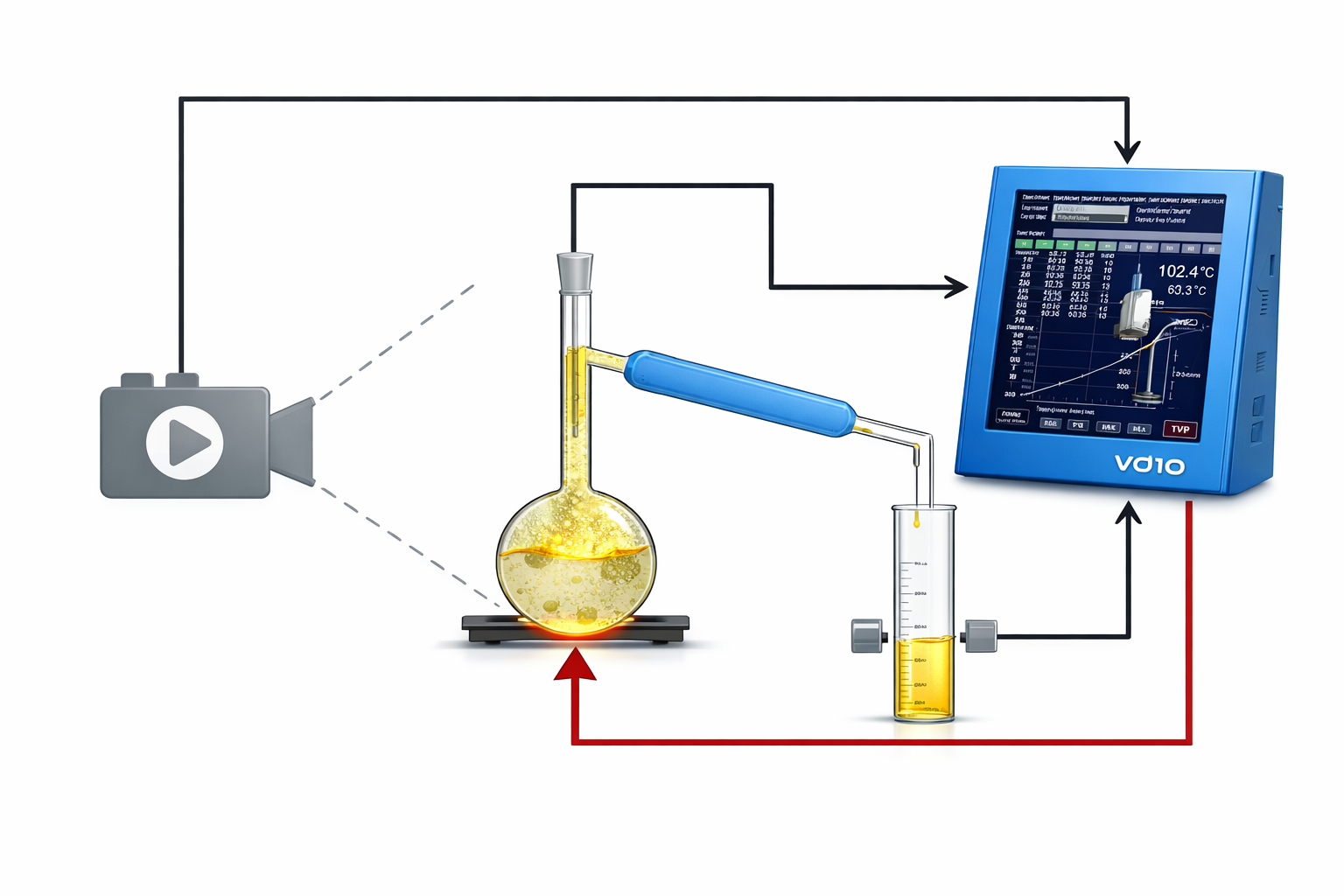
AD Systems’ VD10 combines a video camera with an algorithm that adjusts heating in real time. It respects the conditions of the standard method for initial boiling point (IBP), 5 % recovery times and distillation rate control.
Like an experienced operator, it monitors the sample’s behaviour and predicts the ideal heater settings without requiring user programming or optimisation. This innovation brings automation and precision to the atmospheric distillation analysis of petroleum products.
How does the VD10 atmospheric distillation unit work under ASTM D86 conditions?
Standard test methods such as ASTM D86 divide petroleum samples into four groups based on vapour pressure and boiling points. The group determines the apparatus preparation and test conditions. During a distillation, the liquid is boiled in a flask, vapours condense in a tube and the condensate is collected.
The distillation rate is carefully controlled between 4 and 5 mL per minute, and the temperature of the vapour along with the recovered volume is recorded. Key points noted include the IBP temperature, the temperature at every 5 % volume recovered and the final boiling point (FBP).
The VD10’s intelligent video system verifies the correct installation of the flask, temperature probe and heating plate, then uses image analysis to control the process. Once the test method and sample group are entered, it automatically heats, condenses, measures temperatures and volumes, logs data and prepares for the next run.
How does the VD10 provide ease of use in atmospheric distillation?
The instrument requires no programming. Operators simply select the sample group and the video‑assisted algorithm performs the distillation strictly according to the standard conditions.
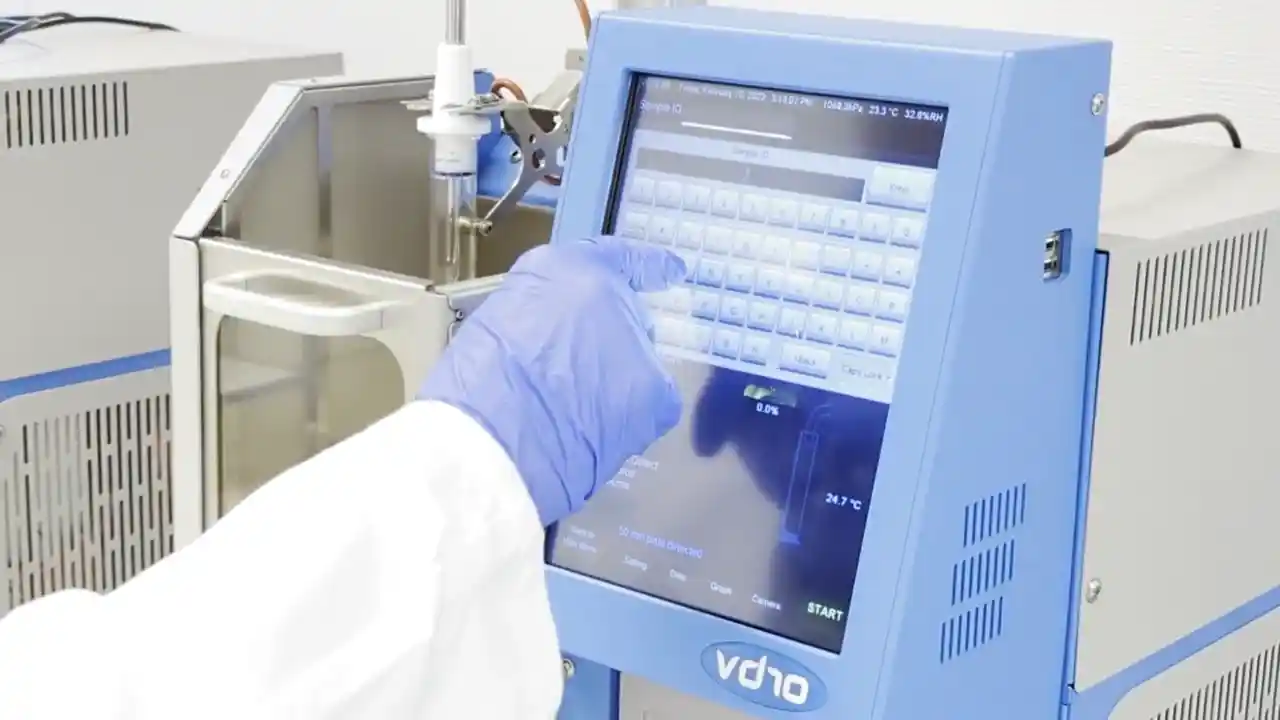
There is no need to pre‑program heating profiles; the instrument automatically adjusts settings for different fuel types, including unknown or difficult samples such as biofuels. Its 10.4 inch colour touchscreen and fully automated workflow make it straightforward to operate and prepare for subsequent analyses
How does the VD10 improve accuracy in atmospheric distillation?
Real‑time imaging of the boiling sample allows the VD10 to control distillation rate, IBP, 5 % recovery times and FBP with exceptional repeatability. Enhanced control of condenser and receiver temperatures, together with a precise volume measurement system, delivers consistently accurate results.
Because the instrument uses image analysis to anticipate boiling phases, it applies the correct heating rate from the start, even for samples with unknown composition.
How does the VD10 reduce labour and operating time in atmospheric distillation?
Since no programming or optimisation is needed, the VD10 achieves perfect results on the first run, saving time for laboratory staff.
Adjusting the condenser temperature from standby to any test condition takes less than three minutes, meaning any test can be started without delay. Rapid heater cooling further reduces downtime between tests, increasing sample throughput.
What error‑proof features are included in the VD10 atmospheric distillation unit?
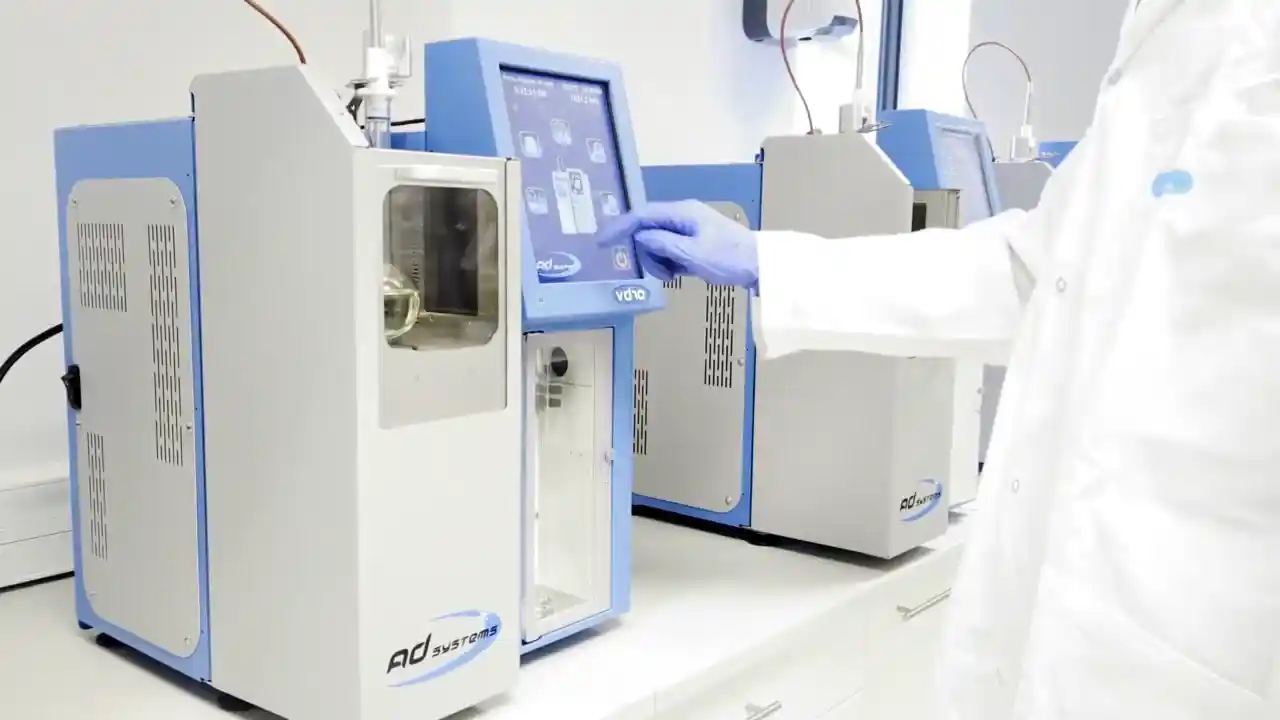
The instrument includes multiple safeguards to prevent common mistakes. It will not start if the wrong heating plate is installed, if the condenser tube is unclean, or if the receiver, vial or probe are incorrectly positioned. The video camera recognises the bottle size and position, and the smart heater lift automatically positions the heater and verifies its diameter.
Visual indicators help the user verify whether each step of the procedure has been completed. These features minimise operator errors and ensure compliance with standard methods.
How does the VD10 prevent false initial boiling point (IBP) results?
Integrated atmospheric condition sensors monitor temperature, humidity and barometric pressure. When the instrument is in standby, it automatically regulates the condenser temperature above the dew point to prevent moisture condensation on the receiver.
This eliminates the common problem of a false IBP caused by a water droplet event and ensures more reliable distillation results.

How does the VD10 enhance operator safety during atmospheric distillation?
Safety is built into the instrument. It has a device that monitors abnormal situations and stops operation if there is a risk to the operator or equipment. The VD10 comes equipped with a fire suppression system that includes an inert gas collector, an injection valve and two flame detectors; in case of a fire, the system automatically activates and an external alarm can be triggered.
To protect users from exposure to vapours, a VOC extraction system operates automatically when the receiving chamber is opened, venting vapours to the laboratory ventilation.
What to do Next?
Speak to our specialists to discover how the VD10 can improve accuracy and efficiency in your atmospheric distillation workflows.
Page FAQ's
Atmospheric distillation is a laboratory process in which a petroleum sample is heated and its vapours condensed to determine boiling characteristics such as the initial boiling point (IBP) and final boiling point (FBP). The boiling range provides insight into the composition and performance of fuels.
The initial boiling point (IBP) is the temperature at which the first drop of condensate is collected during a distillation, and the final boiling point (FBP) is the temperature at which the last drop is recovered. Recording IBP, the temperatures at every 5 % recovered volume, and FBP is part of standard test methods like ASTM D86.
The VD10 uses a video‑assisted control algorithm that automates heating and monitoring, delivering increased accuracy and repeatability without any pre‑programming. It reduces labour, minimises errors, prevents false IBP readings and incorporates safety features such as fire suppression and VOC extraction.
The algorithm continuously analyses the sample’s boiling behaviour and adjusts heating in real time, enabling perfect distillations from the first run even for unknown or challenging samples.
The VD10’s hybrid cooling system and rapid heater cooling allow the instrument to be ready for the next run within minutes. Changing condenser temperatures between groups takes less than three minutes, enabling flexible scheduling of different tests.
Contact Us Today
We take great pleasure in assisting you and ensuring you get a prompt response to your questions
Live chat opening hours Mon – Fri 9:15 to 16:30 (UK Time)