
SciMed Education
Battery Discharge Before Recycling: Why Controlled Testing Matters
In Summary
End-of-life electric vehicle (EV), energy storage and industrial batteries can retain stored electrical energy, creating hazards during handling and treatment. Controlled testing and, where necessary, discharge can help reduce these risks.
NEWARE battery testing systems offer monitoring and charge/discharge capabilities, but the suitability of any particular system for a recycling application must be confirmed.
Why can batteries still contain stored energy at the end of their life?
A battery reaches the end of its original service life when it can no longer meet the performance, reliability or other requirements of its intended use. That does not mean its electrical energy has been exhausted. EV packs, battery energy storage system (BESS) modules and industrial batteries may retain a substantial state of charge when they enter a recycling or assessment facility.
Residual energy can increase the consequences of electrical faults, short circuits or physical damage. Depending on the battery and the activity being undertaken, risks may arise during storage, transportation, disassembly and mechanical processing. Battery chemistry, condition and previous history all influence how the battery should be assessed and handled.
Does every large battery need to be discharged before recycling?
No single discharge requirement applies to every battery in every circumstance. For permitted waste-battery facilities in England, the Environment Agency advises that large battery packs and modules, including those from EVs and BESS installations, should be tested and, where necessary, safely discharged to an appropriate level before further treatment.
The official guidance is available here:
The appropriate course of action depends on the battery condition, intended process, facility procedures and a suitable risk assessment. Damaged or unstable batteries can require specialist handling. Routine charge/discharge equipment should not be assumed suitable for every end-of-life battery. This article provides an overview, not operational safety instructions.
What should be monitored during controlled battery discharge?
Controlled discharge is more than the removal of energy. Monitoring provides information about the battery’s behaviour and helps operators recognise whether a supervised process is remaining within its specified limits. Depending on the system and installed sensors, relevant information can include:
- Voltage and current throughout the discharge period.
- Temperature measurements where suitable sensors are installed.
- Capacity and time-based electrical records.
- Alarms, protective events, interruptions and relevant system logs.
The available measurements, interlocks and protections vary by equipment model and configuration. These features support assessment and control but do not remove the inherent risks associated with battery handling.
How can discharge testing contribute to recycling and second-life assessment?
Electrical measurements may help a facility characterise a battery before deciding on further treatment or whether a more detailed reuse assessment is appropriate. Logged data can provide useful information about the battery’s condition and performance under controlled test conditions.
However, discharge results alone do not establish whether a battery is safe to reuse or suitable for a second-life application. A wider assessment may be necessary, taking account of the battery management system, physical condition, test history and applicable procedures.
What is regenerative battery discharge and why might it matter?
Some high-power battery testing systems use regenerative technology to recover part of the electrical energy released during discharge rather than converting all of it into heat. This can offer an energy-efficiency benefit compared with a non-regenerative approach, depending on the equipment, duty cycle and installation.
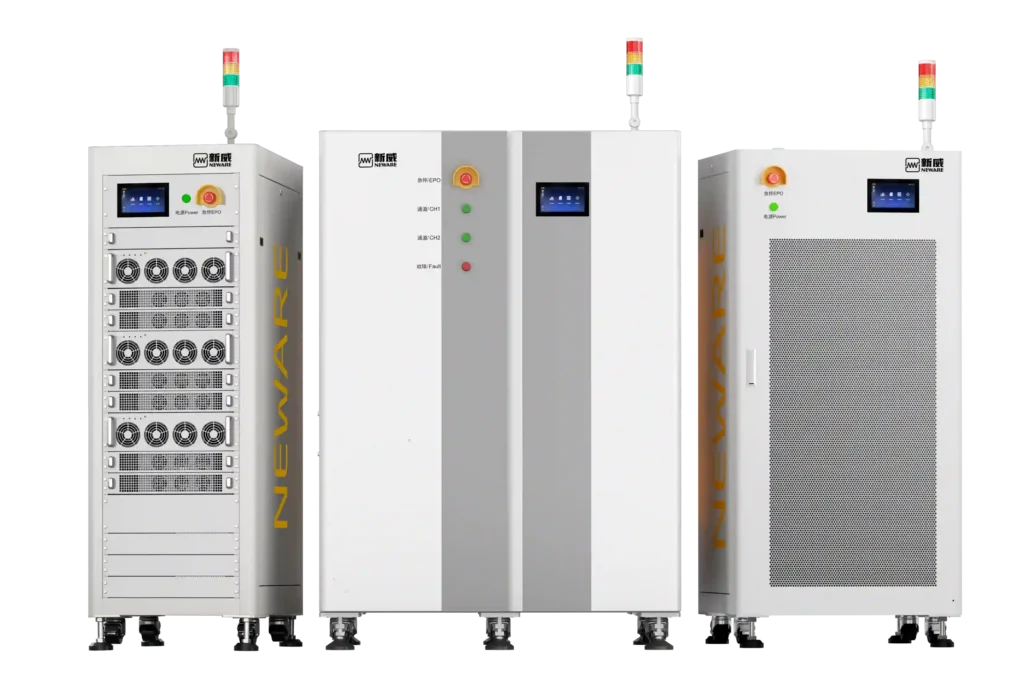
NEWARE identifies energy-feedback functionality within CE-series test equipment. The precise energy pathway and efficiency depend on the selected model. Claims about exporting electricity to the public grid, receiving payments or achieving a specific cost saving should not be made without model-specific and site-specific verification.
How can NEWARE battery testing equipment support controlled discharge?
SciMed supplies NEWARE high-precision battery testing equipment for research and industrial testing.
Within the manufacturer’s CE-6000 range, configurations are described for battery cells, modules and packs, including programmable charge/discharge testing, electrical measurement and various test-system functions.
Equipment capabilities must not be confused with a blanket approval for use on waste, damaged or unstable batteries.
Before recommending a system for a recycling process, SciMed’s technical team and the customer should confirm the intended application, battery condition, required operating range, protective arrangements and any necessary integration.
Equipment capabilities must not be confused with a blanket approval for use on waste, damaged or unstable batteries. Before recommending a system for a recycling process, SciMed’s technical team and the customer should confirm the intended application, battery condition, required operating range, protective arrangements and any necessary integration.
What should recycling facilities consider when evaluating a battery test system?
A useful initial discussion brings together the application requirements and the limits of the proposed equipment. Key considerations include:
- Battery type and format, including cell, module or full pack; chemistry and known condition.
- Required voltage and current range, connection arrangements and access to battery-management information.
- Site risk assessment, trained personnel, emergency arrangements and handling procedures.
- Monitoring, data records, alarms, safeguards and integration with other equipment.
- Whether regenerative operation is relevant, and the installation constraints that may affect it.
A technical review can then determine whether a particular NEWARE configuration warrants further evaluation. This is especially important when the proposed application involves end-of-life batteries rather than conventional development or production testing.
What to Do Next?
Discuss your battery testing and discharge requirements with SciMed.
If you are evaluating battery testing, monitoring or discharge arrangements ahead of recycling, our technical team can help you explore NEWARE system options and the information needed to assess suitability for your application.
Page FAQ's
Yes. Reducing stored electrical energy does not remove every potential hazard. The battery’s chemistry, internal condition and damage history can still introduce risks, so appropriate handling and treatment procedures remain essential.
It should not automatically be connected to standard test equipment. Damaged or potentially unstable batteries may require isolation, specialist assessment and procedures matched to their condition. The site’s competent personnel should determine the appropriate response.
Not necessarily. A programmable battery cycler may support controlled charge/discharge profiles, measurements and data recording, whereas a basic load may provide a more limited discharge function. Capabilities depend on the exact equipment and specification.
Energy-feedback functionality does not automatically establish grid-export capability or an entitlement to payment. Any proposed export arrangement would need separate technical, electrical and commercial confirmation for the specific installation.
The Environment Agency guidance cited here addresses permitted waste-battery facilities in England. Requirements in Scotland, Wales, Northern Ireland and the Republic of Ireland should be checked against the relevant regulators and local rules.
Contact Us Today
We take great pleasure in assisting you and ensuring you get a prompt response to your questions
Live chat opening hours Mon – Fri 9:15 to 16:30 (UK Time)