
SciMed Education
Recycling Lithium‑Ion Batteries – Determining Elemental and Organic Carbon in Black Mass
Introduction
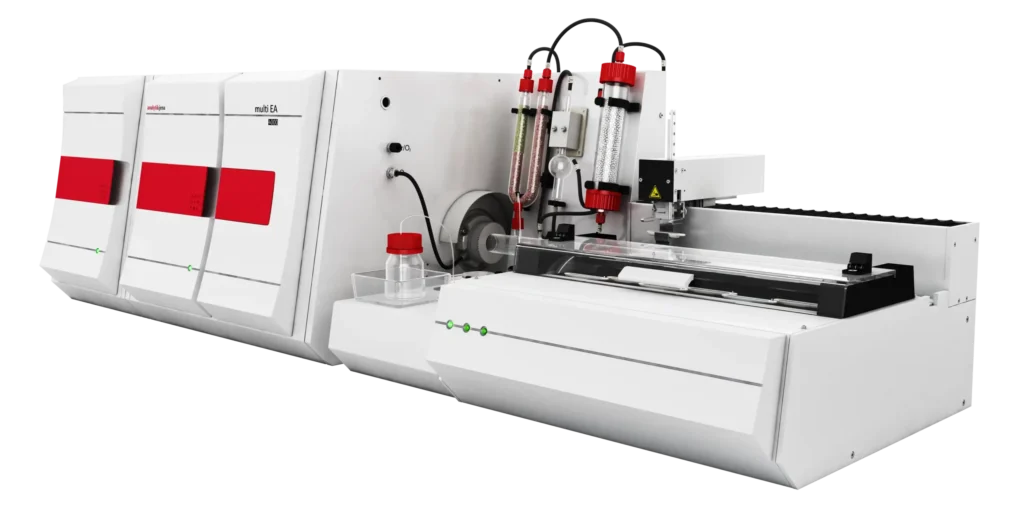
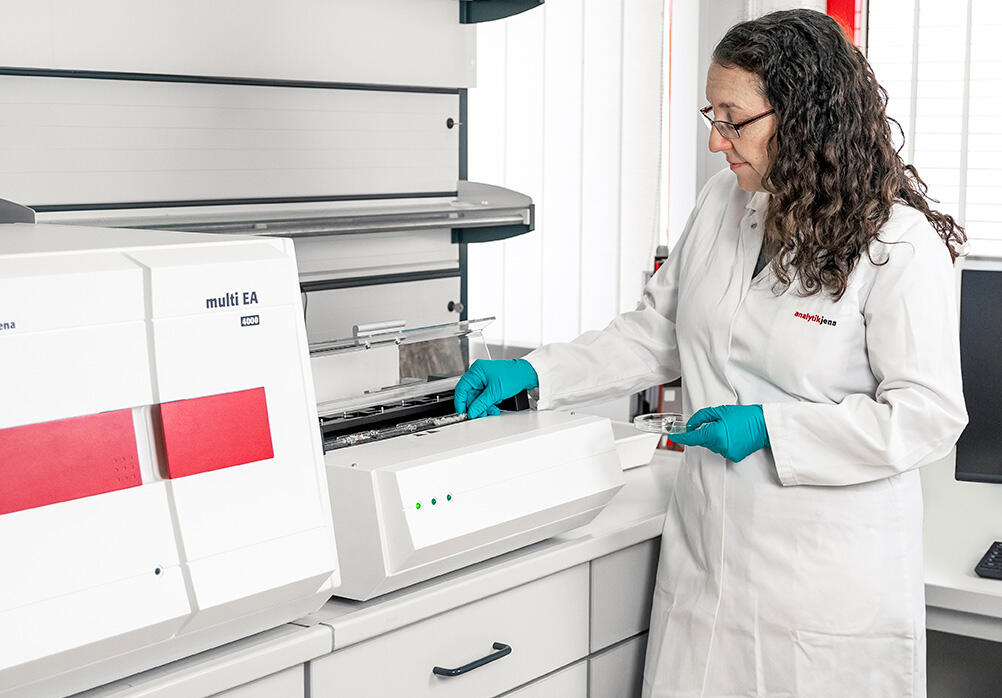
When lithium‑ion batteries reach the end of their useful life, recycling them produces a dark, granular “black mass.” This material contains metals and carbon from the battery’s electrodes and plastics. The multi EA 4000 elemental analyser differentiates between elemental carbon (EC), total carbon (TC) and organically bound carbon (OC) in black mass using a controlled pyrolysis method. By weighing duplicate sample aliquots, pyrolysing one to quantify EC and analysing the other directly for TC, the instrument automatically calculates OC as the difference between TC and EC. The process is fully automated, offering reproducible results across a wide measuring range.
Why Are Lithium‑Ion Battery Recycling and Black Mass Analysis Important?
Energy‑dense, rechargeable lithium‑ion batteries have become a backbone of modern life; they power everything from smartwatches and laptops to e‑bikes and electric cars. Their longer lifespans and ability to hold more energy per unit mass than earlier battery chemistries mean that more and more used batteries are entering the waste stream. To address this, the European Union expects that up to 65 % by mass of lithium‑based batteries will be recycled.
During recycling, the batteries are disassembled, crushed and thermally treated, producing a granular or powdery material called black mass, which consists of metals such as lithium, cobalt, copper, nickel and manganese as well as graphite. Depending on the processing step, it may also contain organic carbon from plastic separators or solvents. Understanding the carbon content of this material helps assess the efficiency of thermal treatment and supports downstream processing.
What Is Black Mass and What Carbon Species Does It Contain?
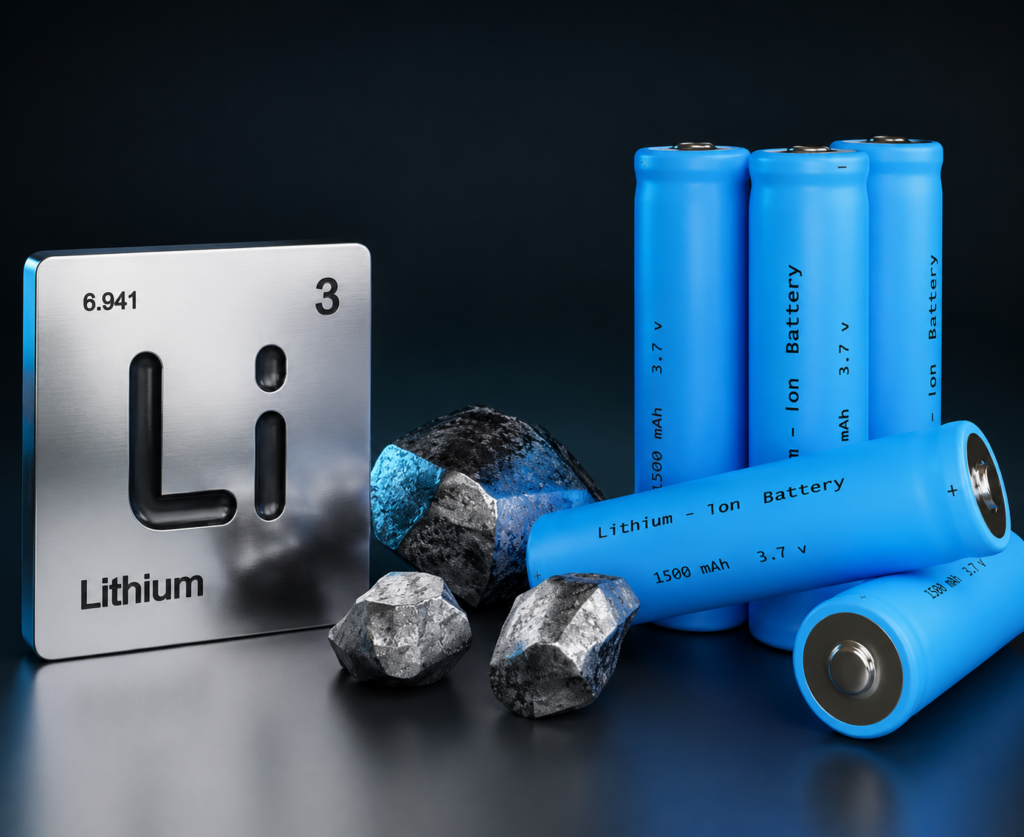
Black mass is the mixture of materials generated when spent lithium‑ion batteries are dismantled and thermally treated during recycling. Its composition depends on the battery chemistry and the recycling stage. Typical constituents include valuable metals such as lithium, cobalt, nickel, copper and manganese, and elemental carbon in the form of graphite, which is used as an anode material in every lithium‑ion battery. Organic carbon compounds may also remain in the black mass from plastic separators or residual solvents.
Distinguishing between elemental carbon (EC) and organically bound carbon (OC) is therefore essential for assessing how effectively the recycling process removes organics and recovers metals.
How Does the multi EA 4000 Determine Elemental and Organically Bound Carbon in Black Mass?
The multi EA 4000 is designed to monitor different carbon species in black mass with a high degree of automation. The method uses a pyrolysis step followed by combustion and detection:
Differential method: OC is calculated as the difference between the total carbon (TC) and elemental carbon (EC) contents, expressed as OC = TC – EC.
Sample handling: For each analysis, two aliquots of the sample are weighed into ceramic boats. One aliquot undergoes pyrolysis to determine EC; the other is combusted directly to determine TC.
Pyrolysis for EC determination: During EC measurement, the furnace is set to 850 °C and purged with argon. The sample is pyrolysed for 360 seconds, after which the gas flow switches from argon to oxygen. The remaining elemental carbon reacts with oxygen to form CO₂, which is detected by nondispersive infrared (NDIR) spectrometry.
Direct combustion for TC: The second aliquot is introduced directly into the hot furnace under pure oxygen, ensuring that all carbon compounds convert to CO₂. EC and TC determinations are performed automatically by the instrument’s software.
The difference between TC and EC values yields the amount of organically bound carbon (OC) in the sample. This approach, aligned with VGB pyrolysis and DIN EN 15936 methods, allows operators to assess how much organic material remains after thermal treatment.
What Samples Were Analysed and How Were They Prepared?
The application note examined pyrolysed black mass from lithium iron phosphate (LFP) batteries in different particle size ranges. Four sample types were analysed:
Sample 1 – filter fraction
Sample 2 – fine particles (0–0.25 mm), V1
Sample 3 – coarse particles (0.25–0.5 mm)
Sample 4 – fine particles (0–0.25 mm), V3
In addition, pure glassy carbon powder (99.95 % carbon) was used for calibration and system testing. The samples were homogeneous fine powders, so no special preparation was necessary.
What Method Settings and Calibration Parameters Were Used?
For combined EC/TC determination, the following method parameters were applied on the multi EA 4000:
Furnace temperature: 850 °C
Pyrolysis (EC) purge time: 360 s
Oxygen flow: 2.5 L min⁻¹
Argon (pyrolysis) flow: 1.5 L min⁻¹
Suction (pump) flow: 1.7 L min⁻¹
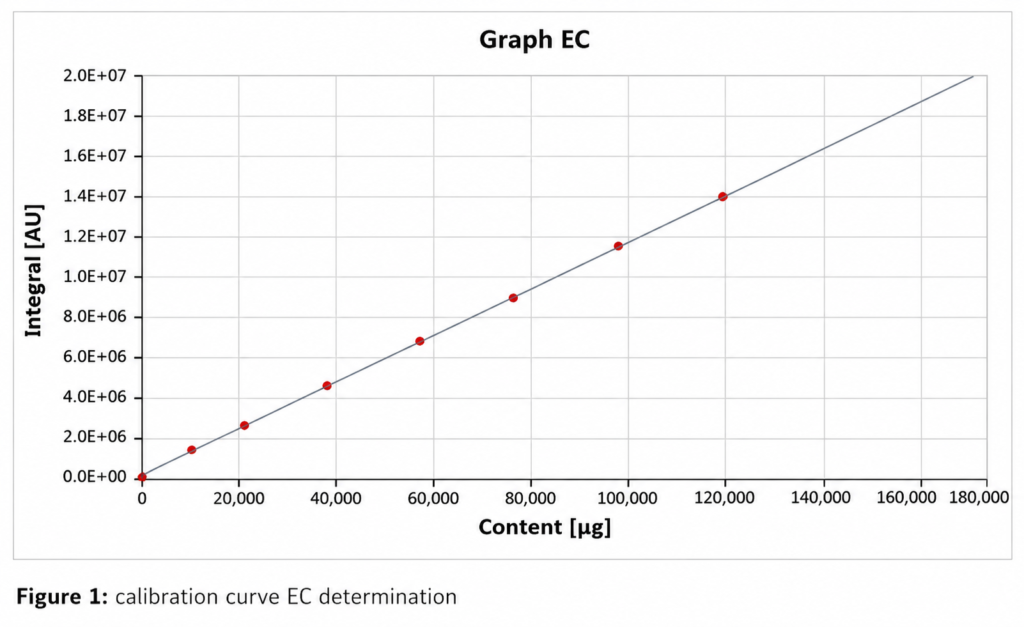
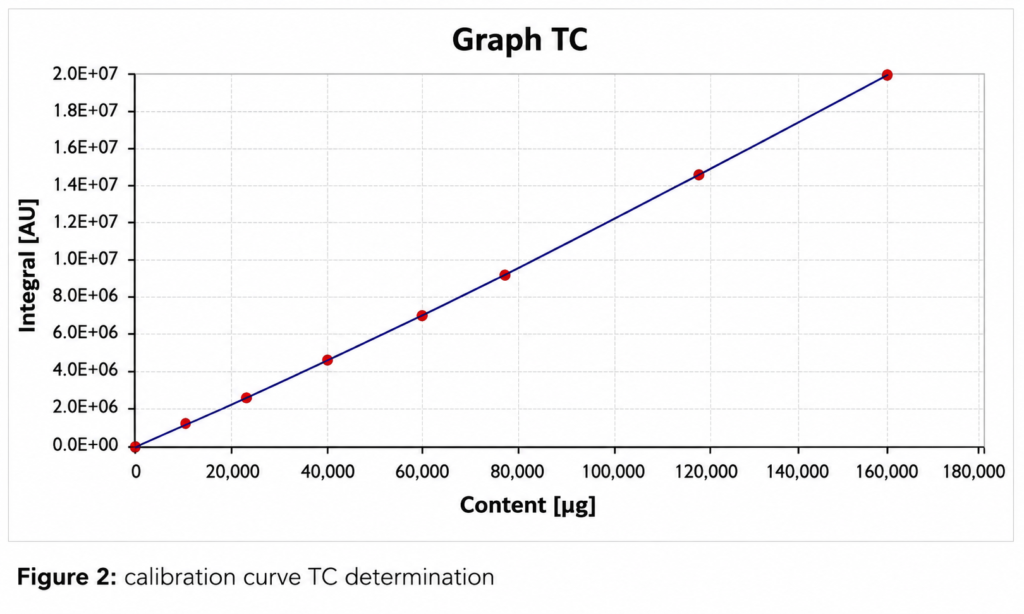
The NDIR detector settings included a maximum integration time of 1 800 seconds, a start concentration of 0.12 ppm, a threshold of 3 ppm and a stability factor of 3. The analyser was calibrated using pure glassy carbon across ranges of 13–110 mg carbon for EC and 11–125 mg carbon for TC. These calibration ranges ensure accurate quantification over the expected mass of carbon in typical samples.
What Samples Were Analysed and How Were They Prepared?
The instrument determined EC and TC for each black mass sample in triplicate. The results (mean ± standard deviation) are summarised in Table 4 of the application note:
| Sample | EC (g kg⁻¹) | TC (g kg⁻¹) | OC (g kg⁻¹) |
|---|---|---|---|
| Sample 1 – filter fraction | 758.7 ± 5.06 | 772.8 ± 6.39 | 14.1 |
| Sample 2 – fine (0–0.25 mm), V1 | 512.8 ± 3.61 | 522.4 ± 12.8 | 9.61 |
| Sample 3 – coarse (0.25–0.5 mm) | 241.9 ± 1.74 | 237.3 ± 0.39 | 0 * |
| Sample 4 – fine (0–0.25 mm), V3 | 223.3 ± 1.70 | 232.6 ± 4.48 | 9.32 |
| Glassy carbon standard (99.95 % C) | 998.3 ± 0.54 | 985.2 ± 17.1 | 0 * |
*Negative OC values were set to zero.
What Do the Results Tell Us About the Recycling Process?
All samples were analysed as triplicates, and the standard was measured in duplicate. Prior testing showed no significant contributions of inorganic carbon (TIC), indicating that TIC does not interfere with the EC/TC measurements. Sample 1 (filter fraction) contained the highest EC and TC levels, whereas coarser Sample 3 displayed much lower values and virtually no organically bound carbon. The variation in OC between samples suggests that particle size and processing steps influence the amount of residual organic material.
Due to high carbon contents, the scatter in measurement values can significantly affect calculated OC; running more replicates and employing outlier selection can improve OC accuracy.
Why Is the multi EA 4000 Analyzer Well Suited for Black Mass Analysis?
According to the application note’s summary, the multi EA 4000 enables rapid and reliable determination of EC and TC in black mass. The automated measurement procedure separates the different carbon parameters with minimal operator effort. Its NDIR detector has a wide measuring range, detecting both very low carbon contents (limit of detection ≈ 10 µg absolute) and very high contents up to 500 mg carbon. Optional accessories allow the analyser to determine total inorganic carbon (TIC), total sulfur (TS) and total halogens (TX) in solid samples.
The recommendation includes a pyrolysis option with a solid autosampler (FPG 48), providing high throughput analysis.
What to do next?
If you are involved in lithium‑ion battery recycling and need accurate carbon characterisation of black mass samples, SciMed can help. To learn more about the multi EA 4000 and its pyrolysis option or to discuss your specific application requirements, please contact our team. We can provide detailed application notes, demonstrations and expert advice on configuring the analyser for EC, TC and OC determination. Our specialists are available via email, phone or live chat to assist you.
Page FAQ's
Black mass is the dark powdery mixture produced by disassembling, crushing and thermally treating spent lithium‑ion batteries. It contains metals such as lithium, cobalt, nickel, copper and manganese as well as elemental carbon (graphite) and possible traces of organic carbon from plastics and solvents
Differentiating EC and OC helps assess how effectively the recycling process removes organic materials and recovers valuable components. Elemental carbon remains after pyrolysis in an inert atmosphere, while organic carbon is released during thermal decomposition. Calculating OC as TC minus EC provides insight into residual organic contamination.
The analyser uses a differential pyrolysis/combustion method. One sample aliquot is pyrolysed at 850 °C in argon to remove organics, then oxidised in oxygen to quantify elemental carbon. A second aliquot is combusted directly in oxygen to measure total carbon. The instrument computes OC as the difference between these values.
In the study, EC values ranged from about 223 g kg⁻¹ in fine black mass samples to 758 g kg⁻¹ in the filter fraction, while TC values ranged from 232 g kg⁻¹ to 773 g kg⁻¹. Organically bound carbon was modest, typically 0–14 g kg⁻¹.
Contact Us Today
We take great pleasure in assisting you and ensuring you get a prompt response to your questions
Live chat opening hours Mon – Fri 9:15 to 16:30 (UK Time)