
SciMed Education
Measuring Corrosion Under Real Operating Conditions
Combine Gamry’s electrochemical precision with Parr’s extreme environments to measure corrosion where it really happens – under pressure, temperature, and flow.

Introduction
Corrosion in industrial systems (oil & gas, chemical processing, pipelines) occurs under complex, real-world conditions:
• Elevated temperatures and pressures
• Multiphase fluids (brine, hydrocarbons, gases)
• Reactive gas environments (CO₂, H₂S, etc.)
• Turbulent flow
• Variable chemistry and inhibitors
Traditional benchtop electrochemical cells often fail to replicate these conditions, leading to results that may not reliably translate to field performance.
Soloution
Combining a Parr high-pressure reactor system with a Gamry potentiostat enables true in-situ electrochemical corrosion testing under realistic environments. There is no need for sample removal. Electrochemistry is performed inside the reactor, meaning that the recorded data is not affected by any exposure artifacts.

The Gamry software controls the electrochemical measurements and the rotational speed of the rotating cylinder electrode. Test sequences can be built for controlled corrosion testing over extended periods.
System Overview | Parr High-Pressure RCE Reactor
The Parr High Pressure Rotating Cylinder Electrode (RCE) system provides:
• High-pressure autoclave environment
• Rotating cylinder working electrode
• Integrated reference and counter electrodes
• Designed specifically for corrosion studies at high pressure and temperature (ASTM G185)
Gamry Interface 1010E Potentiostat
The Gamry potentiostat enables:
• Precise control of electrochemical potential/current
• Integration with Parr system allows measurements at multiple rotational speeds under controlled temperature and pressure:
• Open Circuit Potential (OCV)
• Linear Polarisation Resistance (LPR)
• Electrochemical Impedance Spectroscopy (EIS)
• Potentiodynamic Scans
• High accuracy across wide current and frequency ranges
• Advanced data acquisition and analysis
Why testing under real conditions matters
ASTM-based corrosion testing emphasises that laboratory systems should simulate field conditions as closely as possible. This includes flow conditions, pressure, temperature, and fluid composition.
What the combined Parr and Gamry system enables is:
• Measurement under real temperature
• Measurement under real pressure
• Controlled hydrodynamic flow conditions via rotation
Result: Electrochemical data that is representative of real operating environments, not simplified lab approximations.
Gamry electrochemical measurements tell you how corrosion happens. Parr ensures it happens under real operating conditions. Together, you don’t just measure corrosion — you recreate it, control it, and understand it.
Case study
These are the results from a linear polarisation resistance (LPR) and electrochemical impedance spectroscopy (EIS) experiment with carbon steel in brine at 100oC and 25 bar, using rotational speeds of 0 to 2000 rpm to replicate different flow velocities over 48 hours.

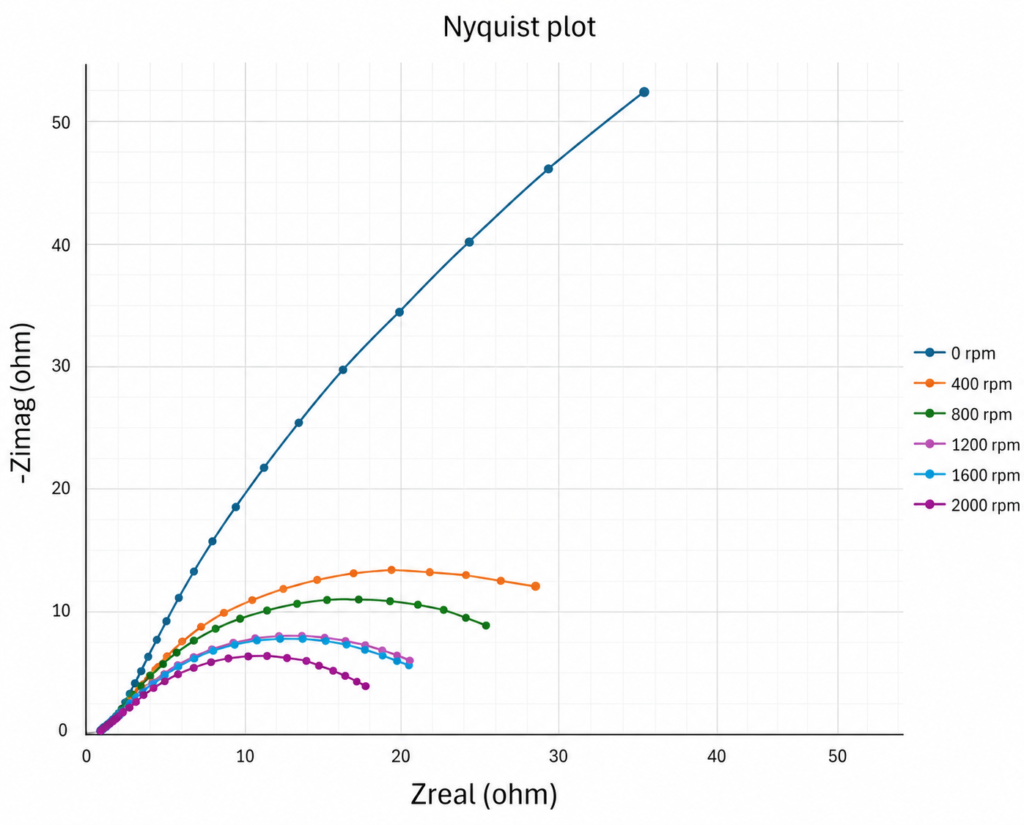
Figure 1: Corrosion rate (mmpy) vs rotational speed and cycle number
Figure 2: Nyquist plot from electrochemical impedance spectroscopy (EIS) measurements at increasing rotational speeds.


Figure 3a: Bode Impedance plot from electrochemical impedance spectroscopy (EIS) measurements at increasing rotational speeds.
Figure 3b: Bode Phase plot from electrochemical impedance spectroscopy (EIS) measurements at increasing rotational speeds.
Corrosion rates were determined from the polarisation resistance measurements using the Stern-Geary Equation and Faraday’s Law:
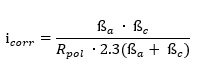
Equation 1: Stern-Geary Equation
Where:
icorr = corrosion current (A/cm2)
Rpol = polarisation resistance (Ohm·cm2)
ßa, ßc = Tafel constants (V/decade of current)

Equation 2: Corrosion rate from Faraday’s Law
Where:
icorr = corrosion current (A/cm2)
EW = equivalent weight (g)
= density (g/cm3)
These calculations are automatic analysis options in the Gamry software.
What to do next?
Looking to perform corrosion testing under realistic operating conditions? SciMed can help you select the right Parr reactor and Gamry potentiostat for your application.
Contact our team today to discuss your requirements, request a demonstration, or learn more about our corrosion testing solutions.
Page FAQ's
A Rotating Cylinder Electrode (RCE) is an electrochemical test cell that uses a rotating cylindrical working electrode to simulate the effects of fluid flow on metal surfaces. By varying the rotation speed, it is possible to reproduce different flow conditions commonly encountered in pipelines, process equipment, and oil and gas applications.
Many industrial systems operate under elevated pressures and temperatures that significantly influence corrosion behaviour. Testing under these conditions provides more representative data than ambient laboratory experiments, improving confidence that the results will reflect real operating environments.
The combined system supports a wide range of electrochemical measurements, including Open Circuit Potential (OCP), Linear Polarisation Resistance (LPR), Electrochemical Impedance Spectroscopy (EIS), and potentiodynamic polarisation. These techniques provide information on corrosion rates, corrosion mechanisms, and material performance.
Fluid flow affects oxygen transport, corrosion product removal, inhibitor performance, and mass transfer at the metal surface. Using a rotating cylinder electrode allows researchers to study how different flow velocities influence corrosion under controlled laboratory conditions.
Contact Us Today
We take great pleasure in assisting you and ensuring you get a prompt response to your questions
Live chat opening hours Mon – Fri 9:15 to 16:30 (UK Time)