
SciMed Education
Benefits of TIC Analysis in Lithium Battery Recycling for Lithium Recovery – Education Page
Introduction
Total inorganic carbon (TIC) analysis offers a rapid, automated way to quantify lithium carbonate dissolved in the wash waters of lithium‑ion battery recycling, giving a reliable indicator of process success while using only a few millilitres of sample.
Why is lithium recovery from lithium‑ion batteries important in recycling?
Lithium‑ion batteries (LIBs) are critical to the rapid electrification of transport and energy storage, yet lithium is classified by the European Union as a critical raw material. Growing demand, rising raw‑material prices and legally defined recycling quotas mean that recovering lithium is no longer optional—it is essential for a circular economy. Researchers at the Institute for Metallurgical Process Technology (IME) at RWTH Aachen University are therefore developing early‑stage lithium recovery techniques. They thermally pre‑treat whole cells or shredded batteries to remove organic binders and electrolytes and to transform the lithium into more extractable phases. This pretreatment aims to form lithium carbonate, which can then be recovered as a target product in subsequent wash‑out stages.
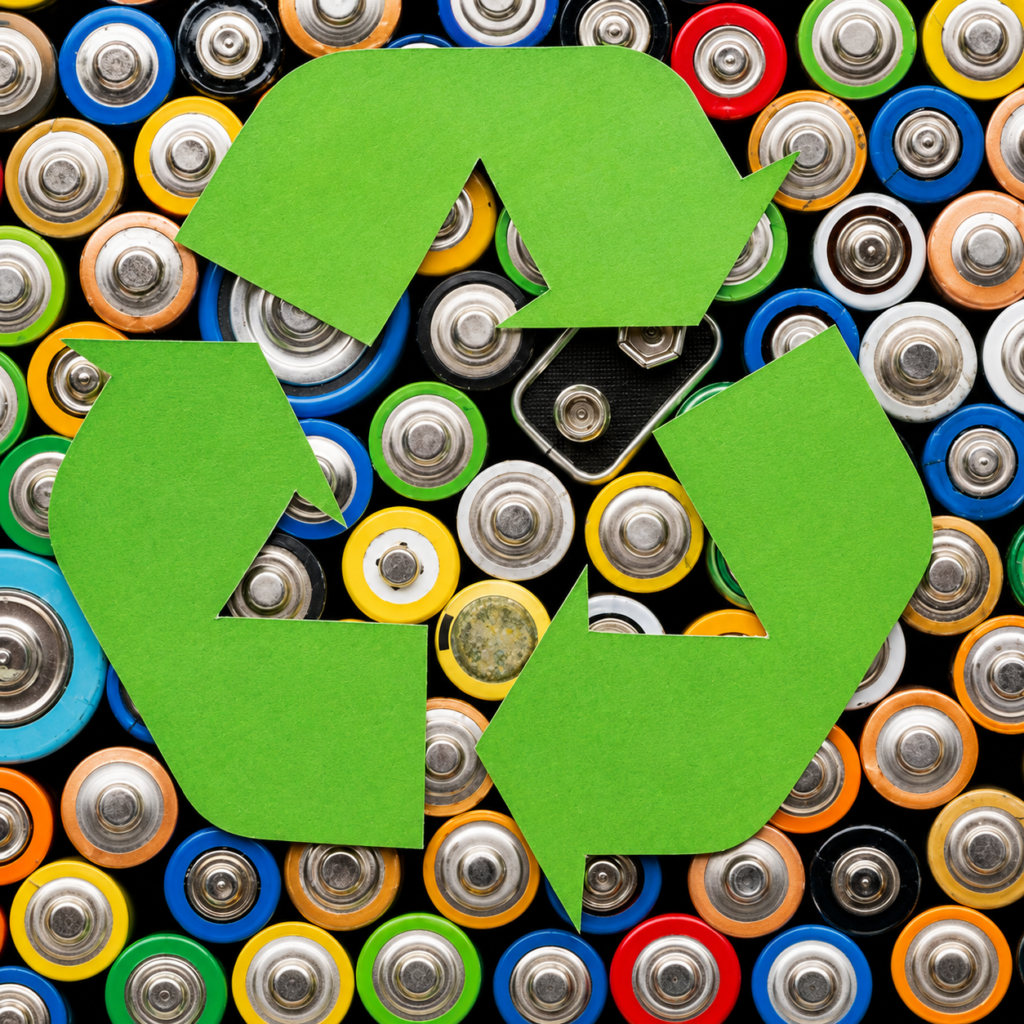
How does thermal pretreatment and water washing produce lithium carbonate and lithium fluoride?
During thermal pretreatment, battery material is heated under specific gas atmospheres to remove organic components and to promote reduction reactions that convert lithium into lithium carbonate. After pretreatment, the active mass is washed with deionised water so that the formed lithium carbonate dissolves into the liquid phase. However, lithium fluoride also forms under certain conditions, and this salt can dissolve along with lithium carbonate. The composition of the wash solution therefore depends on the thermal pretreatment parameters, and assessing the ratio of lithium carbonate to lithium fluoride is crucial for process optimisation.
What challenges exist in analysing lithium carbonate and lithium fluoride in recycling water?
To evaluate pretreatment and wash parameters, researchers must determine not only the purity of the resulting lithium salt but also which lithium compound—carbonate or fluoride—is present. Traditional analysis often relies on precipitating the dissolved salts and then performing X‑ray diffraction (XRD) to estimate phase fractions. This approach is time‑consuming because the sample must first be precipitated and then prepared for XRD, and the semi‑quantitative nature of XRD provides only approximate results. Given the need to process many samples and rapidly compare different process conditions, a faster and more quantitative measurement method is desirable.
How does TIC analysis determine carbonate content in lithium battery recycling waters?
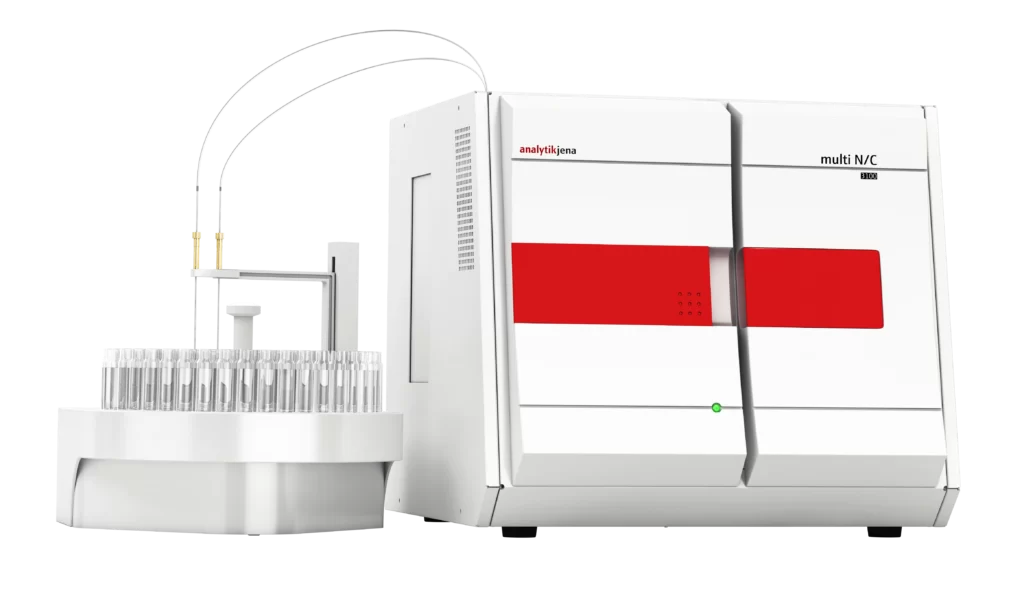
Total inorganic carbon (TIC) analysis measures carbonate by converting all inorganic carbon species into carbon dioxide and quantifying the released gas with a non‑dispersive infrared (NDIR) detector. In the reported application, IME researchers used Analytik Jena’s multi N/C 2100S (predecessor to the multi N/C 2300) with an AS 60 autosampler. A 500 µL aliquot of the diluted wash solution is injected into the TIC reactor, where 10 % phosphoric acid converts carbonate ions into dissolved carbon dioxide.
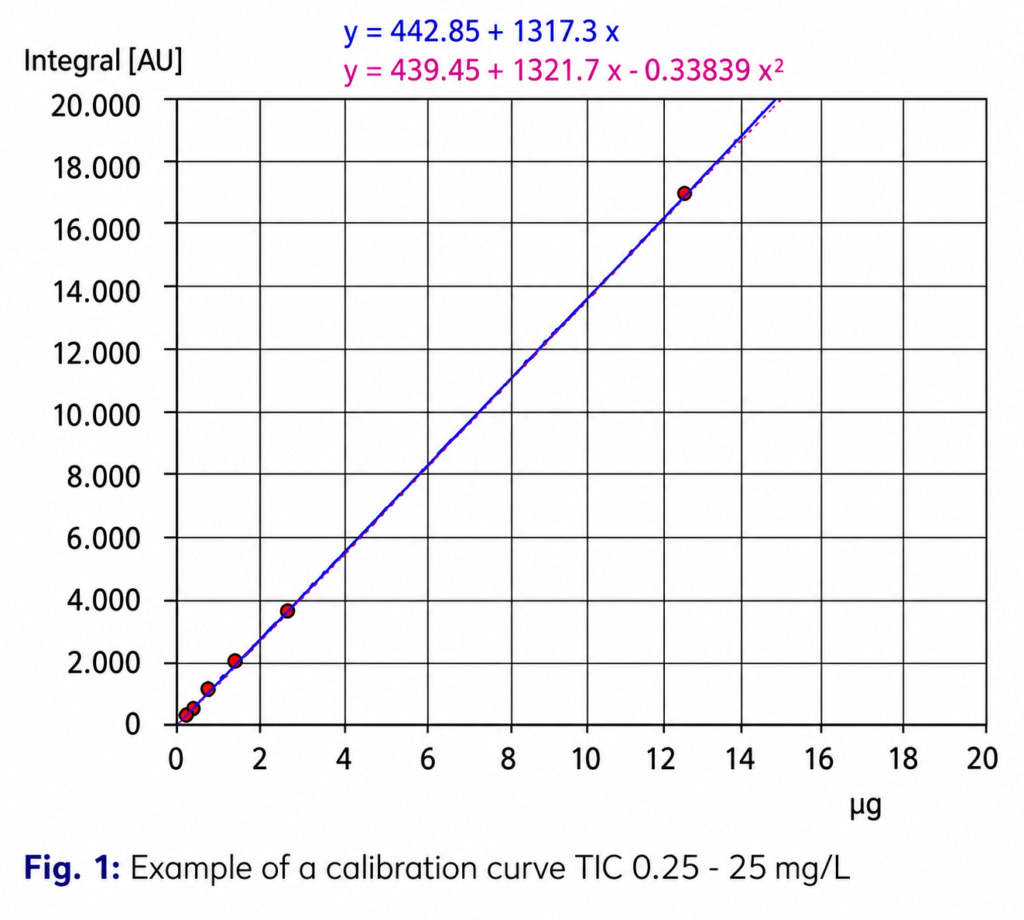
Carrier gas purges the CO₂ to the detector, and the TIC concentration is calculated from a calibration curve using sodium carbonate/hydrogen carbonate standards within the 0.25–25 mg L⁻¹ range. Duplicate or triplicate injections ensure reproducible results, and typical sample consumption is less than 5 mL for a triplicate determination.
What were the results of TIC analysis under different thermal pretreatment atmospheres?
The study examined four samples of pretreated battery mass, each heated at 610 °C for 1 hour but under different atmospheres: pure nitrogen (N₂), carbon dioxide (CO₂), nitrogen with 2.5 % oxygen (N₂ + 2.5 % O₂) and nitrogen with 5 % oxygen (N₂ + 5 % O₂). After washing, the TIC of each solution was measured and compared with fluorine (F) concentrations and XRD‑derived phase fractions:
- Under N₂, the wash solution contained approximately 47.5 mg L⁻¹ TIC and 36.6 mg L⁻¹ fluoride; the precipitated salt contained 81.5 % lithium carbonate and 18.5 % lithium fluoride.
- Under CO₂, TIC increased to about 60.2 mg L⁻¹ and fluoride decreased to 27.9 mg L⁻¹; the salt contained 86.4 % lithium carbonate.
- When 2.5 % O₂ was added to nitrogen, TIC dropped to roughly 38.4 mg L⁻¹, fluoride was 34.8 mg L⁻¹, and the salt contained 73.3 % lithium carbonate.
- With 5 % O₂ in nitrogen, TIC was lowest at around 29.5 mg L⁻¹, fluoride was 30.0 mg L⁻¹, and the salt contained 79.2 % lithium carbonate.
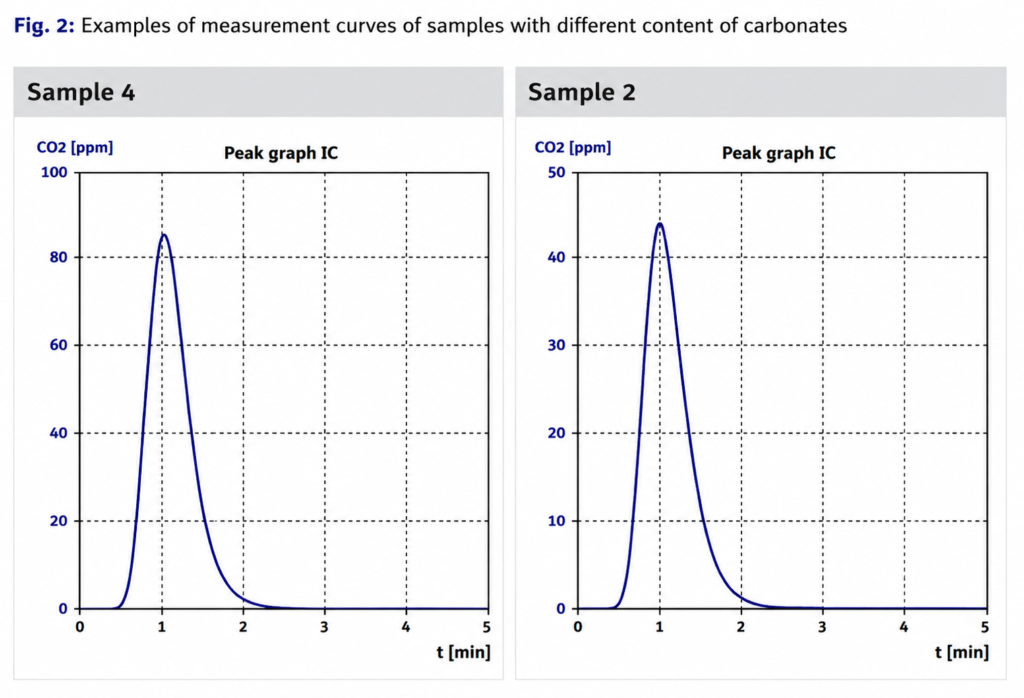
These data show that samples with higher lithium carbonate fractions in the salt product correspond to higher TIC readings in solution. The excellent reproducibility of multiple injections allows direct comparison of samples and quantification of lithium recovery rates.
Why is TIC analysis superior to XRD for assessing lithium carbonate recovery?
TIC analysis provides several advantages over semi‑quantitative XRD measurement. First, TIC determines carbonate directly in solution, eliminating the need to precipitate and process the sample. This dramatically reduces analysis time, allowing rapid comparison across a series of tests. Second, TIC measurement offers high accuracy with low standard deviation, making it suitable for quantitative assessments. In contrast, XRD phase fraction determination is semi‑quantitative and more variable.
The multi N/C 2300 analyzer also requires very little sample—less than 5 mL for triplicate determinations—saving material when sample volumes are limited. Additionally, the instrument can measure total organic carbon (TOC) on the same sample to detect unwanted organic residues that may compromise lithium‑salt purity.
Which instrument configurations are recommended for TIC analysis in battery recycling?
Analytik Jena recommends the multi N/C 2300 with direct injection for TIC determination. When paired with the AS 60 autosampler, this configuration offers automated sample handling and low sample consumption. Alternatively, the multi N/C 3300 with flow injection can be combined with an AS vario autosampler; different rack sizes (e.g., 60‑ or 72‑position racks) accommodate various throughput requirements. These setups provide high‑precision TIC measurement and the option to extend to TOC analysis for process monitoring.
How can TIC analysis help evaluate process success in lithium battery recycling?
By comparing TIC values across different thermal pretreatment conditions, process engineers can directly assess how much lithium carbonate is dissolved in the wash water and infer the yield of lithium recovery. Higher TIC readings generally indicate higher lithium carbonate generation and therefore greater recovery efficiency, while lower TIC values may signal the presence of unwanted lithium fluoride or incomplete conversion. Because TIC analysis is both rapid and accurate, it can be integrated into routine monitoring to optimise process parameters, evaluate new pretreatment atmospheres and quickly troubleshoot deviations.
What to do next?
Total inorganic carbon analysis has emerged as a powerful tool for quantifying lithium carbonate in battery‑recycling process waters. If you are working in battery recycling or process development and want to learn more about implementing TIC or TOC analysis, contact the SciMed team. Our specialists can discuss instrument configurations, arrange demonstrations, and help you integrate TIC measurement into your quality control workflow. For further reading, explore our education pages on carbon analysis and battery recycling, or request a consultation with a SciMed technical expert.
Page FAQ's
Total Inorganic Carbon (TIC) analysis quantifies inorganic carbon species in a sample by converting them to carbon dioxide and measuring the resulting gas with an infrared detector.
TIC offers faster, more accurate measurement with minimal sample preparation. Unlike XRD, it does not require precipitation of the salt and provides quantitative results with low standard deviation.
Less than 5 mL of solution is typically sufficient for a triplicate TIC determination on the multi N/C 2300 analyzer.
Yes. The multi N/C analyzers can also measure total organic carbon (TOC), allowing users to identify organic residues carried over from thermal treatment that might affect lithium‑salt purity.
Contact Us Today
We take great pleasure in assisting you and ensuring you get a prompt response to your questions
Live chat opening hours Mon – Fri 9:15 to 16:30 (UK Time)