
SciMed Education
Determination of Organic Impurities (TOC) in Raw Materials for Cathode Production in Lithium‑Ion Batteries
Introduction
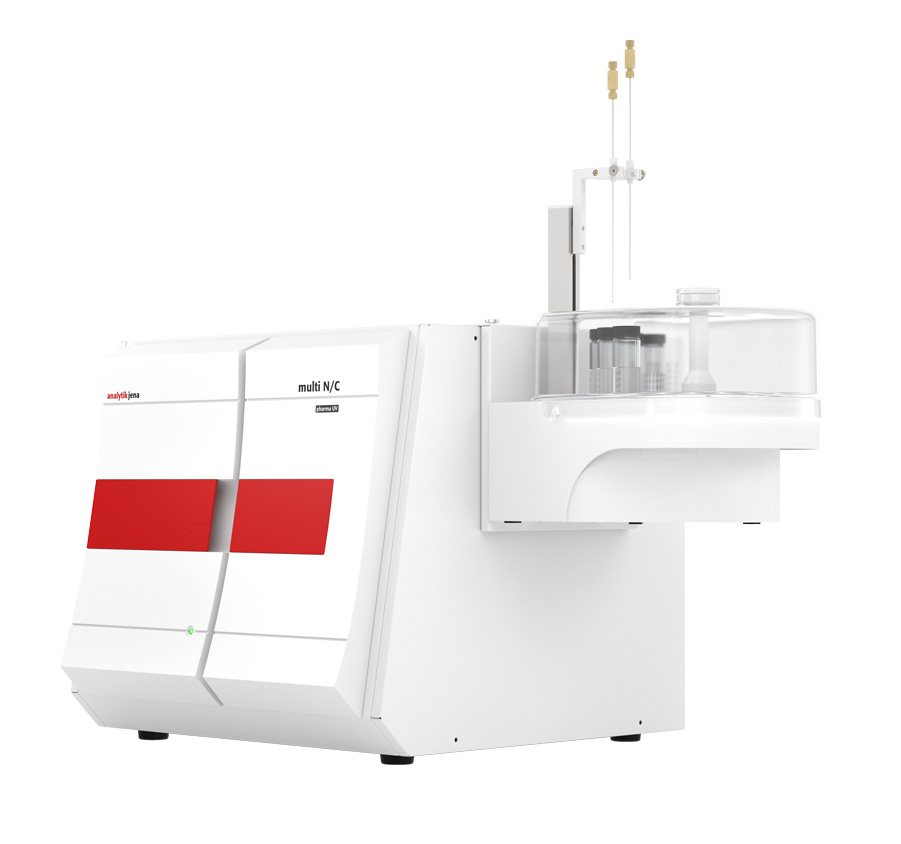
Monitoring the total organic carbon (TOC) content of metal salts used to manufacture lithium‑ion battery cathodes helps ensure that these raw materials are free from organic impurities. Low TOC concentrations are achieved by dissolving the salts in water or dilute acid and analysing them by a high‑temperature TOC analyser such as the multi N/C 3100. The method provides a sensitive measure of trace organic contaminants while minimising salt load on the instrument.
What is total organic carbon (TOC) analysis for cathode raw materials?
Total organic carbon is a widely used sum parameter that measures the amount of carbon bound in organic compounds. In the context of lithium‑ion batteries, the cathode is typically the most expensive component and is produced by coating an aluminium foil with active material. Common active materials include nickel–manganese–cobalt oxides (NMC), nickel–cobalt–aluminium oxides (NCA), lithium iron phosphate (LFP) and lithium manganese oxide (LMO). These active materials are manufactured from metal salts such as nickel sulfate, manganese sulfate, cobalt sulfate and lithium carbonate.
To ensure optimum battery performance, these salts must be supplied in battery‑grade quality. Trace metals and organic impurities can form electrochemically inert phases that hinder lithium‑ion transport and reduce capacity. While trace metals are commonly measured by ICP‑OES, organic impurities are quantified using TOC. The salt is dissolved in distilled water and then analysed with a TOC analyser; the measured carbon content reflects the total amount of organic contamination.

How is TOC determined using the NPOC method?
The application uses the non‑purgeable organic carbon (NPOC) method on a multi N/C 3100 analyser. Samples are first acidified to pH ≤2 with 2 M hydrochloric acid, causing inorganic carbonates and hydrogen carbonates to decompose. The resulting carbon dioxide is removed by purging with an auxiliary gas, and a control measurement confirms complete removal. Next, a replicate of the acidified sample is injected into a catalyst‑filled combustion tube and combusted at high temperature, producing carbon dioxide from any organic compounds. The released CO₂ is detected by a focus‑radiation non‑dispersive infrared (FR‑NDIR) detector, and calibration allows the TOC content to be reported in mg L⁻¹
What samples and reagents are required for TOC analysis?
The study investigated five metal salts commonly used in cathode production: lithium carbonate (Li₂CO₃), cobalt sulfate (CoSO₄·7H₂O), cobalt chloride (CoCl₂·6H₂O), manganese sulfate (MnSO₄·H₂O) and nickel sulfate (NiSO₄·6H₂O). Distilled water was used to prepare salt solutions, and 2 M hydrochloric acid assisted dissolution when solubility was poor, such as for Li₂CO₃. Potassium hydrogen phthalate (KHP) served as the TOC stock solution and calibration standard. Calibration solutions ranged from 0.5 mg L⁻¹ to 5 mg L⁻¹ TOC, with a 1 mg L⁻¹ control standard used to monitor instrument performance.
How are metal salt solutions prepared for TOC determination?
Most of the investigated salts have excellent water solubility (>300 g L⁻¹). To minimise the salt load on the combustion tube while obtaining a measurable signal, the salts were initially dissolved at 100 g L⁻¹ (20 g L⁻¹ for Li₂CO₃). Lithium carbonate required acidification with 2 M HCl to reach 20 g L⁻¹ in solution; this resulted in a final acid concentration of 1 mol L⁻¹. Fifty millilitres of each solution were prepared. After the first measurements, the TOC concentrations observed (> 2 mg L⁻¹) allowed the salt concentration to be reduced to 50 g L⁻¹ or 25 g L⁻¹ to further decrease matrix load. Nickel sulfate was the exception: its TOC signal at 100 g L⁻¹ was too low, so the concentration was increased to 400 g L⁻¹ to achieve reliable readings.
What instrument settings are used for reliable TOC measurements?
The multi N/C 3100 analyser was calibrated with KHP solutions between 0.5 and 5 mg L⁻¹ TOC. Key method parameters included:
Determination method: NPOC with TIC (total inorganic carbon) control.
Sample digestion: Catalyst‑assisted high‑temperature combustion at 700 °C.
Replicates: At least three (maximum four) injections per sample vial.
Autosampler: AS vario with a rack for 72 samples and 40 mL vials.
Injection volume: 500 µL.
Purge time: 180 s to remove TIC, extended to 900 s for lithium carbonate solutions.
To minimise wear on the combustion tube, a tube with a 26 mm outer diameter was filled in sequence with quartz wool, quartz cullet, platinum catalyst, quartz wool, quartz cullet and a high‑temperature mat. The combustion temperature was chosen to ensure complete oxidation of organic compounds while preventing the formation of salt melts that would quickly destroy the catalyst. Between each salt measurement, acidified ultrapure water was analysed to flush the system, and an eluate blank value (TOC of the water used) was measured and automatically subtracted from subsequent results.

What results were obtained for the different salt solutions?
Triple injections were performed for each sample, and the TOC concentration in the salts was calculated from the aqueous solution results. The precision (coefficient of variation) was always below 5 %, even at concentrations around 1 mg L⁻¹, demonstrating the high detection strength of the analyser. Recoveries for 1 mg L⁻¹ spikes ranged from 94 % to 110 %, confirming excellent accuracy.
Measured TOC values included:
Cobalt sulfate (50 g L⁻¹): 0.84 ± 0.03 mg L⁻¹; spiked sample 1.92 ± 0.04 mg L⁻¹ with 108 % recovery; calculated TOC in salt 16.8 mg kg⁻¹.
Cobalt chloride (25 g L⁻¹): 1.88 ± 0.02 mg L⁻¹; spiked sample 2.82 ± 0.04 mg L⁻¹ with 94 % recovery; TOC in salt 75.2 mg kg⁻¹.
Lithium carbonate (5 g L⁻¹): 1.07 ± 0.02 mg L⁻¹; spiked sample 2.51 ± 0.07 mg L⁻¹ with 110 % recovery; TOC in salt 282 mg kg⁻¹.
Manganese sulfate (50 g L⁻¹): 0.90 ± 0.04 mg L⁻¹; spiked sample 1.92 ± 0.02 mg L⁻¹ with 102 % recovery; TOC in salt 18.0 mg kg⁻¹.
Nickel sulfate (400 g L⁻¹): 1.44 ± 0.03 mg L⁻¹; spiked sample 2.45 ± 0.07 mg L⁻¹ with 101 % recovery; TOC in salt 3.60 mg kg⁻¹.
A long‑term test with cobalt sulfate solution, measured alternately with acidified water, gave a mean TOC value of 0.878 mg L⁻¹ ± 0.074 mg L⁻¹ for ten sets of three injections.
How can instrument performance be maintained during TOC analysis of salt solutions?
Regular maintenance of the combustion tube is crucial. The high‑temperature mat at the top of the filling should be replaced periodically to maintain stable performance when analysing salt solutions with low TOC concentrations. A decrease in recovery of the control standard indicates that replacement is required. Using a blank value to correct for the TOC contribution from the solvent and alternating salt measurements with acidified water flushes also helps maintain instrument stability.
Why choose the multi N/C 3100 for TOC analysis in battery‑grade salts?
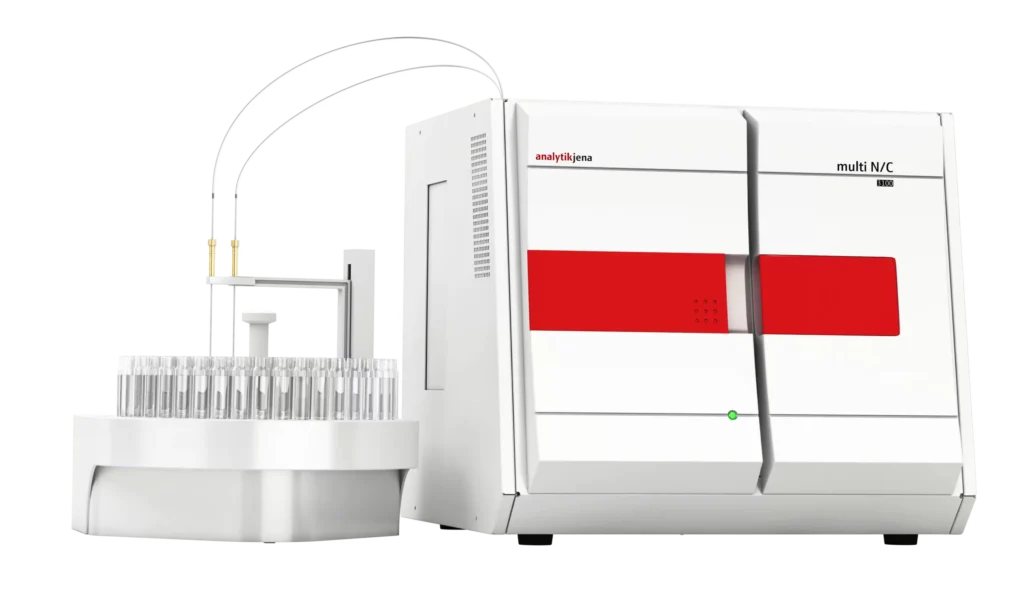
The multi N/C 3100 is a versatile high‑temperature TOC analyser that provides excellent detection strength and flexibility. Its high sensitivity allows the preparation of salt solutions at relatively low concentrations, reducing matrix load and prolonging the life of the combustion tube. The instrument permits adjustment of combustion temperature, preventing the formation of melts that could block the tube. A blank correction accounts for the solvent contribution to the TOC result, and the TIC control measurement validates results when samples have high carbonate content. Quick access to the combustion tube makes it easy to replace components, ensuring rapid routine analysis.
What to do next?
If you are involved in the production of lithium‑ion batteries or require high‑precision TOC analysis of salt solutions, SciMed can help you select the right instrument. The multi N/C 3100, paired with the AS vario autosampler and dedicated quartz combustion tube, provides reliable and sensitive measurements for organic impurities in metal salts. To discover our full range of TOC analysers, contact the SciMed team today or explore the product range on our website.
Page FAQ's
Organic impurities in battery‑grade salts can form inert phases that hinder lithium‑ion transport and reduce battery capacity. Measuring TOC helps verify that the salts meet strict purity requirements.
Salts are dissolved in distilled water (100 g L⁻¹, reduced after initial testing) or dilute acid for poorly soluble salts such as lithium carbonate. The solutions are then acidified to remove inorganic carbon before combustion.
Using the NPOC method with TIC control, catalyst‑assisted combustion at 700 °C, replicate injections and appropriate purge times ensures reliable results.
The application evaluated Li₂CO₃, CoSO₄·7H₂O, CoCl₂·6H₂O, MnSO₄·H₂O and NiSO₄·6H₂O.
Contact Us Today
We take great pleasure in assisting you and ensuring you get a prompt response to your questions
Live chat opening hours Mon – Fri 9:15 to 16:30 (UK Time)