
SciMed Education
Water Washout Testing of Lubricating Greases Using ASTM D1264
Introduction
Water washout testing measures the ability of a lubricating grease to remain in place on a bearing when exposed to a controlled stream of water, helping laboratories evaluate grease water resistance and select suitable lubricants for machinery operating in wet or exposed environments.
Why is water washout testing important for lubricating greases?
Lubricating greases used in machinery can be exposed to water through rain, spray, washdown processes or other operating conditions. When bearings are exposed to water, the risk of mechanical problems can increase through corrosion, oxidation, rust and bearing failure. A grease with suitable water resistance can remain more effectively adhered to the lubricated surface and help protect components against some of these damaging effects.
Water washout testing provides a standardised way of assessing how effectively a grease remains in place when subjected to water. The results can support the grease selection process, particularly for outdoor machinery and other equipment that may regularly encounter wet conditions, with the aim of reducing the frequency of component replacement and repair.
What is the ASTM D1264 water washout test for lubricating greases?
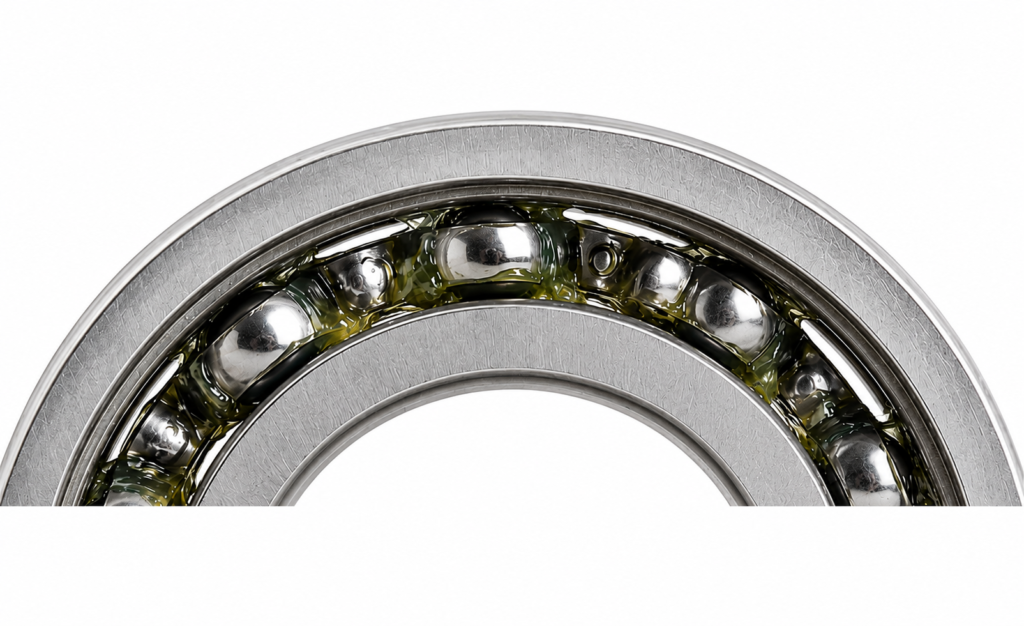
ASTM D1264 is a test method used to determine the water washout characteristics of lubricating greases. The method evaluates the ability of a grease to remain intact within a ball bearing while the bearing is rotated and exposed to a controlled stream of water.
During ASTM D1264 testing, a prepared bearing containing the grease sample is subjected to water under specified conditions for a defined period. The amount of grease removed during the test is then determined, allowing the percentage of grease lost through water washout to be evaluated.
The resulting water washout value provides useful information when comparing lubricating greases and determining their suitability for applications where bearings or other mechanical components could be exposed to water.
How does water contamination affect lubricating grease and machinery?
Water exposure can contribute to an increased rate of mechanical failure by encouraging corrosion, oxidation and rust within machinery and bearing systems. If a grease is unable to remain on the lubricated surface when exposed to water, the level of lubrication and protection provided to the component may be reduced.
Greases with greater resistance to water washout can remain more effectively attached to surfaces under wet conditions. Assessing this behaviour allows suitable lubricating greases to be selected for machinery where water exposure is expected, helping to support machine longevity and reduce the potential for water-related damage.
How is ASTM D1264 water washout testing carried out?
The water washout testing procedure begins by preparing the test bearing and packing it with the lubricating grease being evaluated. The bearing housing and bearing shaft are assembled securely before being installed in the testing system.
The water bath is filled with distilled water and brought to the required test temperature. The flow rate is then adjusted to the specified conditions before the test is started. During testing, the bearing rotates while a controlled stream of water is directed towards the bearing assembly.
Under the ASTM D1264 conditions described in the technical information, the ball bearing rotates at 600 ± 30 rpm while water at either 38°C or 79°C is applied at a rate of 5 ± 0.5 mL/s for 60 ± 1 minutes. The amount of grease lost during this controlled exposure is then used to assess the grease’s resistance to water washout.
How does the K19201 Water Washout Tester perform ASTM D1264 grease testing?
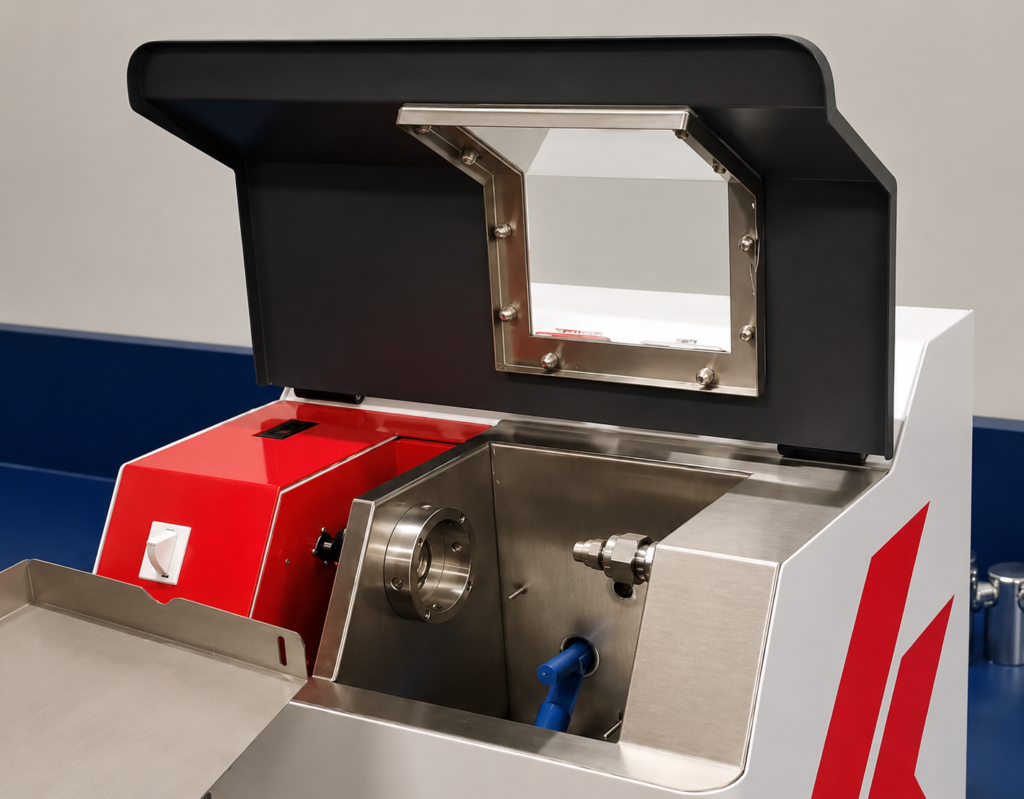
The Koehler K19201 Water Washout Tester is designed to determine the resistance of lubricating greases to water washout under controlled test conditions. The instrument rotates a lubricated ASTM ball bearing at 600 rpm inside a bearing and housing assembly while directing a stream of water towards the bearing at the specified flow rate and temperature.
The system includes a water reservoir, bearing housing, circulation system and drive motor. The water reservoir incorporates temperature control equipment, while the circulation system controls the delivery of water throughout the test. A two-pulley arrangement allows the water to circulate while it is being heated, helping the system reach the required test conditions before and during analysis.
What temperatures are used for ASTM D1264 water washout testing?
The K19201 Water Washout Tester is designed to operate at the test temperatures required for the applicable ASTM procedure. The water reservoir incorporates a cartridge heater, thermoregulator and thermometer port for temperature control at 100°F and 175°F, corresponding to approximately 38°C and 79°C.
Maintaining controlled water temperature is an important part of producing consistent water washout testing conditions, allowing the behaviour of different lubricating greases to be compared under the required parameters.

How can ASTM D1264 water washout results support grease selection?
The water washout test measures the percentage of grease removed during a specified period of water exposure. This information can be used when selecting greases for machinery that may operate outdoors or in environments where bearings are regularly exposed to water.
A grease that demonstrates greater resistance to washout may be more appropriate for applications where maintaining lubrication during water exposure is particularly important. By evaluating grease performance under standardised conditions, laboratories and lubricant manufacturers can make more informed comparisons between grease formulations and their intended applications.
How does ASTM D4950 relate to lubricating grease water washout testing?
ASTM D4950 provides a classification and specification system for automotive service greases. Within the classification system, the prefixes L and G are used for chassis greases and greases intended for wheel bearing lubrication respectively, with additional categories used to distinguish different levels of service.
When considered alongside ASTM D1264 water washout testing, these classifications can help support the characterisation and selection of automotive service greases. The K19201 Water Washout Tester is designed to conform to ASTM D1264 and D4950, as well as IP 215 and FTM 791-3252 specifications.
What to do next?
For laboratories looking to evaluate the water washout characteristics of lubricating greases, SciMed supplies the Koehler K19201 Water Washout Tester for controlled testing in accordance with ASTM D1264 and related specifications.
Speak to the SciMed team to discuss your lubricating grease testing requirements, instrument specifications or the suitability of the K19201 Water Washout Tester for your laboratory.
Page FAQ's
Water washout resistance is important because grease may be required to remain on bearings and other mechanical components that are exposed to water. Selecting a grease with suitable water resistance can help maintain lubrication and reduce the potential for corrosion, rust and water-related bearing damage.
The ASTM D1264 test conditions described in the technical information expose the rotating bearing to the controlled water stream for 60 ± 1 minutes.
Under the ASTM D1264 conditions described, the ball bearing rotates at 600 ± 30 rpm while being exposed to the controlled water stream.
The water washout testing conditions described use water temperatures of 38°C or 79°C, equivalent to approximately 100°F or 175°F.
Contact Us Today
We take great pleasure in assisting you and ensuring you get a prompt response to your questions
Live chat opening hours Mon – Fri 9:15 to 16:30 (UK Time)