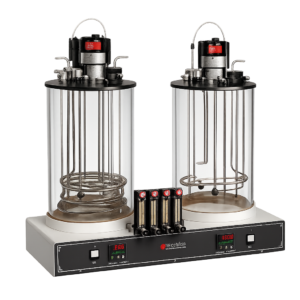
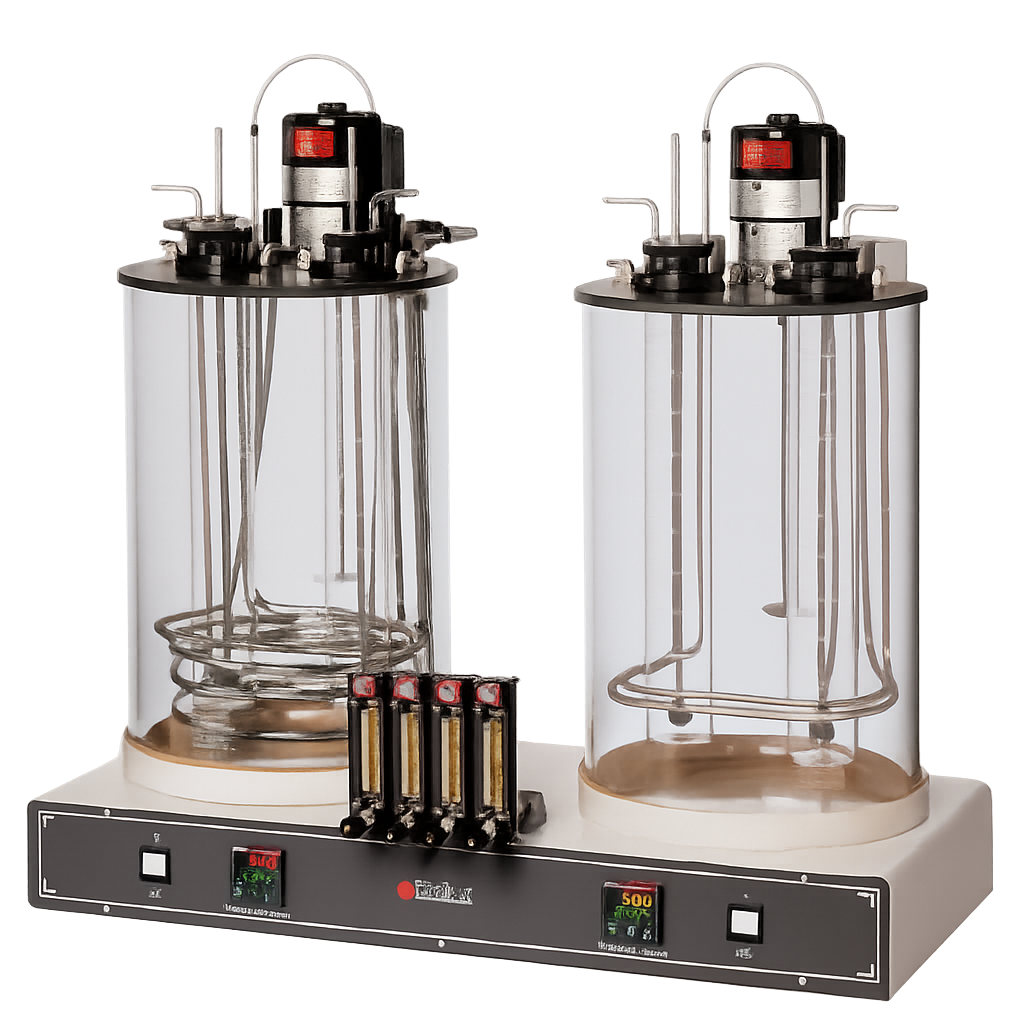
D892 and D6082 Dual Twin Foaming Characteristics Test Apparatus

The Foaming Baths are used for determination of foaming of lubricating oils in applications involving turbulence, high speed gearing or high-volume pumping.

Product Overview

Foaming in lubricating oils can cause inadequate lubrication, cavitation, overflow and premature oxidation. These twin baths can be used for four tests in accordance with control ASTM D6082 and ASTM D892 specifications. The dual liquid baths feature digital temperature control for Sequences I to IV.

Features & Benefits

Digital °C/°F temperature control

Cold bath requires external chiller

Hot bath: Ambient to 150°C

Air flow: 94mL/min or 200mL/min
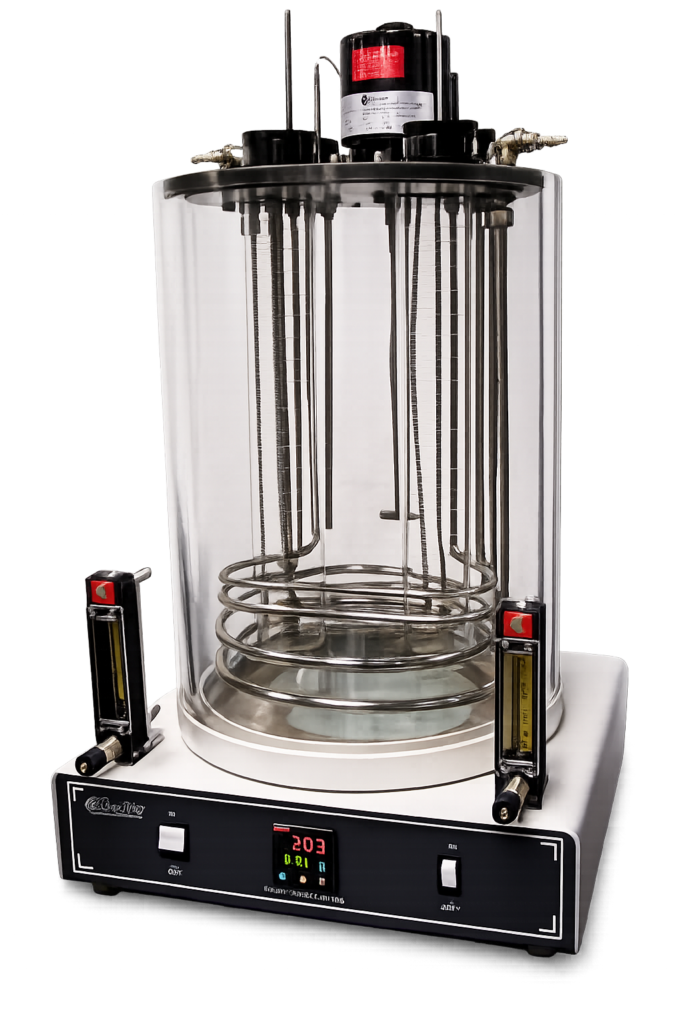
Key applications of D892 and D6082

Conforms to the specifications of: 

ASTM D892, D6082; ISO 892; IP 146; DIN 51566; FTM 791-3211; NF T 60-129

Temperature Control: Digital Setpoint and Displays °C/°F switchable
Built-in Over-temperature Cut-off Protection

Bath Temperature: Left (Cold) Bath: External chiller required to perform Sequence I and III at 24°C
Right (Hot) Bath: Ambient to 150°C (302°F)

Air Flow Rate: 94mL/min and 200mL/min

 Bath Capacity: 9 gal (38.5L) each

Model

Bath Temperature

Air Flow Rate

K43092 Dual Twin

24°C and 93.5°C

94mL/min

K43093 Automatic Time Sequence

24°C and 93.5°C

94mL/min

K43049 Sequence IV Liquid

150°C

200mL/min

About the D892 and D6082 Dual Twin Foaming Characteristics Test Apparatus

The foaming test involves blowing air through the sample with a controlled volume at different specified temperatures, including a newer high temperature test at 150°C. At the end of each aeration period the resultant foam is measured and at different intervals afterward. In the high temperature test, the amount of time required for the foam to collapse to “0” after the aeration period is also measured.

The Dual Twin Foaming Characteristics Test Apparatus performs two tests at 24°C and two tests at 93.5°C.

The apparatus consist consists of two constant temperature baths with 1000mL test cylinders, certified diffusers, air delivery tubes, and flowmeters (94mL/min.) for each sample.

The baths are equipped with microprocessor temperature controls, copper immersion heaters and 1⁄20hp circulation stirrers to maintain temperature uniformity of ±0.5°C. Microprocessor PID control provides quick temperature stabilisation without overshoot and the bath is protected by an overtemperature control circuit that interrupts power should the bath temperature exceed a programmed cut-off point.

The dual LED displays provide actual and setpoint temperature values in °C/°F format and the test cylinders are held securely in place by quick-locking cams in the bath cover assembly to ensure that are stable.

A separate stainless steel support rack is provided to hold the test cylinders after removal from the bath. The cold bath (24°C) has built-in coils for circulating exit air from the high temperature test cylinders prior to passing to a volume meter, and a separate coil for circulating cooling water or refrigerant when the ambient temperature exceeds the test temperature. The baths are supplied with rubber stoppers and glass air outlet tubes for each cylinder.

Bath controls are enclosed in a finished steel base with chemical resistant polyurethane enamel finish. Communications software is available as an extra: ramp-to-set and other enhanced features are available as optional extras.

The Included Accessories for all baths are:

• Test Cylinders, 1000mL (4)

• Diffuser Stones, calibrated and certified (4)

• Air Delivery Tube Assemblies (4)

• Air Outlet Tubes (4)

• Rubber Stoppers (4)

• Bath Jars (2)

• Support Rack (1)

• Acrylic Safety Shield, 18”

FTM 791-3213 Aircraft Lubricants Test – This test employs more severe conditions, a smaller sample, increased air flow and a longer aeration period to test the foaming characteristics of aircraft-turbine lubricants. This test must be requested as the apparatus will be custom made.

SciMed can supply a range of diffuser stones, both certified and non-certified. For more information about any of the baths and test methods please contact us.

Determine the foaming tendency and stability of lubricating oils with automated ASTM-compliant testing across multiple temperature conditions.

Product FAQ's

  1. It is used to measure the foaming tendency and stability of lubricating oils.
  1. Foaming can reduce lubrication efficiency and cause problems in machinery.
  1. It allows two tests to be run at the same time for better efficiency and comparison.

Contact Us Today

We take great pleasure in assisting you and ensuring you get a prompt response to your questions

Live chat opening hours Mon – Fri 9:15 to 16:30 (UK Time)

Request a Call Back

Please refer to our Privacy statement for information on how SciMed uses your details.
Back to Menu