Home » Products » Thermal Methods and Analysis » Parr Oxygen Bomb Calorimeters 7200 & 7400
Parr 7200 and 7400 Oxygen Bomb Calorimeters
Measure gross calorific value with precision or automation using Parr 7200 and 7400 isoperibol oxygen bomb calorimeters.
Product Overview
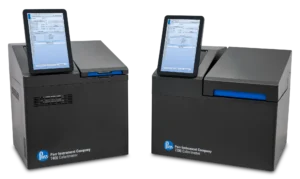
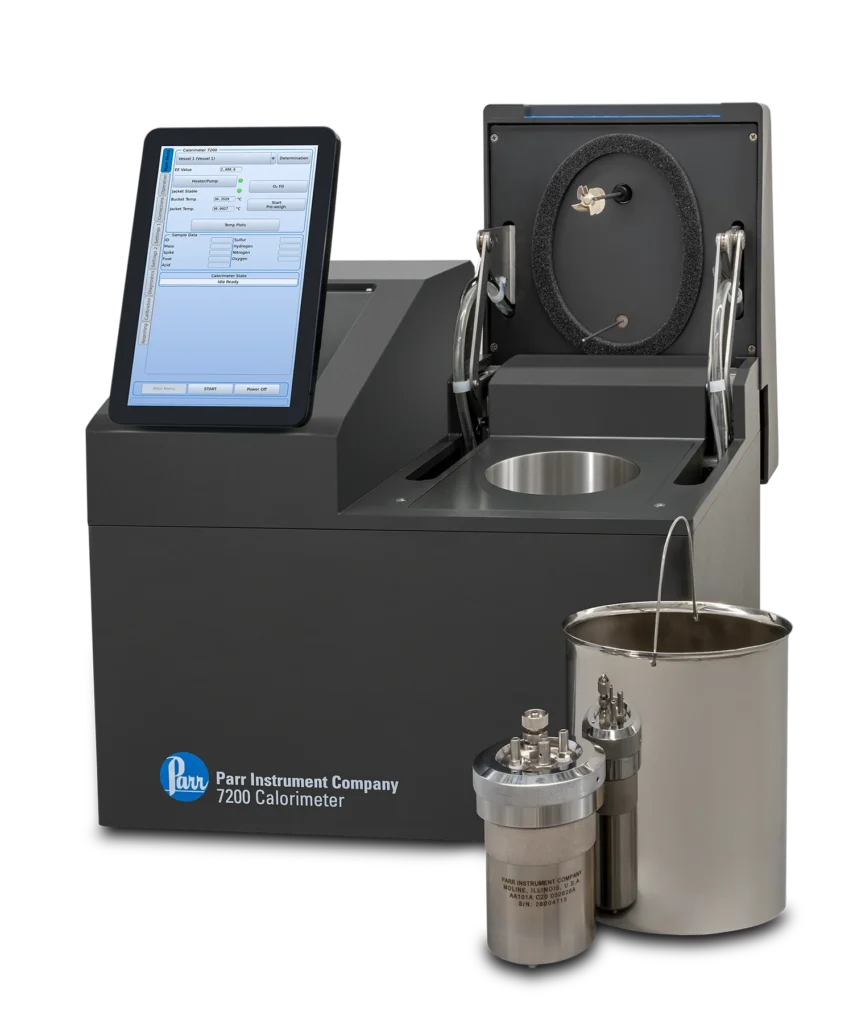
The Parr new 7200 and 7400 oxygen bomb calorimeters provide precise determination of the gross and net calorific values of solid and liquid combustible materials. Both instruments introduce a 10-inch adjustable touchscreen, upgraded processing power and a redesigned software interface. The 7200 prioritises measurement flexibility through its removable combustion vessel and bucket, making it well suited to research, specialist samples and quality control. The 7400 automates key preparation and post-test operations to minimise operator handling in busy laboratories.
Both instruments are isoperibol in nature and offer 0.1% precision classification meaning even the strictest test methods are supported.
SciMed supports laboratories across the UK and Ireland in selecting the right model, vessel configuration and testing workflow.
Features & Benefits
Precision-Focused 7200
Removable vessel and bucket enable flexible testing configurations.
Automated 7400 Workflow
Automatic filling, rinsing and cooling reduce repetitive laboratory handling.
Adjustable Touchscreen
Ten-inch display improves everyday readability and operation.
High Sample Throughput
7400 processes approximately six to seven tests per hour.
Versatile Vessel Options
7200 supports additional vessels for specialist sample energies.
Key applications
- Choice of precision or automation: select the 7200 for configurable, operator-controlled workflows or the 7400 for high-volume, routine testing.
- Modern touchscreen interface: both models feature a 10-inch adjustable high-resolution display, a faster CPU and redesigned menus.
- High-throughput 7400: automatic oxygen and bucket filling, vessel exhaust, rinsing and cooling reduce repetitive handling between tests.
- Flexible 7200 vessel platform: removable vessel-and-bucket technology supports a wide range of compatible vessels and sample energies.
- Defined analytical performance: 7200 precision classification of 0.05–0.10%; 7400 classification of 0.10%, under manufacturer-specified conditions.
- Digital connections: USB communications and Ethernet networking support laboratory workflows and reporting.
- Small 7200 footprint: 43 cm width is approximately 5 cm narrower than the previous 6200 design.
- UK and Ireland support: discuss installation, sample requirements, training and instrument selection with SciMed.
About the Parr 7200 & 7400 Oxygen Bomb Calorimeters
Oxygen bomb calorimetry measures the heat released when a prepared sample combusts in a sealed, oxygen-pressurised vessel. The calorimeter measures the resulting temperature change within a controlled thermal system, then uses standardisation data and calculation corrections to determine the sample’s gross heat of combustion.
Results are commonly expressed in MJ/kg or other units appropriate to the application. This makes calorimetry valuable for comparing the energy content of fuels, waste-derived materials, biomass, combustible industrial products and many other samples.
The Parr 7200 and 7400 are both isoperibol calorimeters meaning they both meet the strictest of international standards. In this arrangement, a temperature-controlled water jacket provides a stable measurement environment around the calorimeter bucket.
Both use the established Parr approach to combustion-vessel testing while introducing a larger touchscreen, improved processing and updated navigation. Choosing between them is less about new versus old technology and more about the laboratory’s sample variety, required precision, operator workload and routine test volume.
Understanding oxygen bomb calorimetry
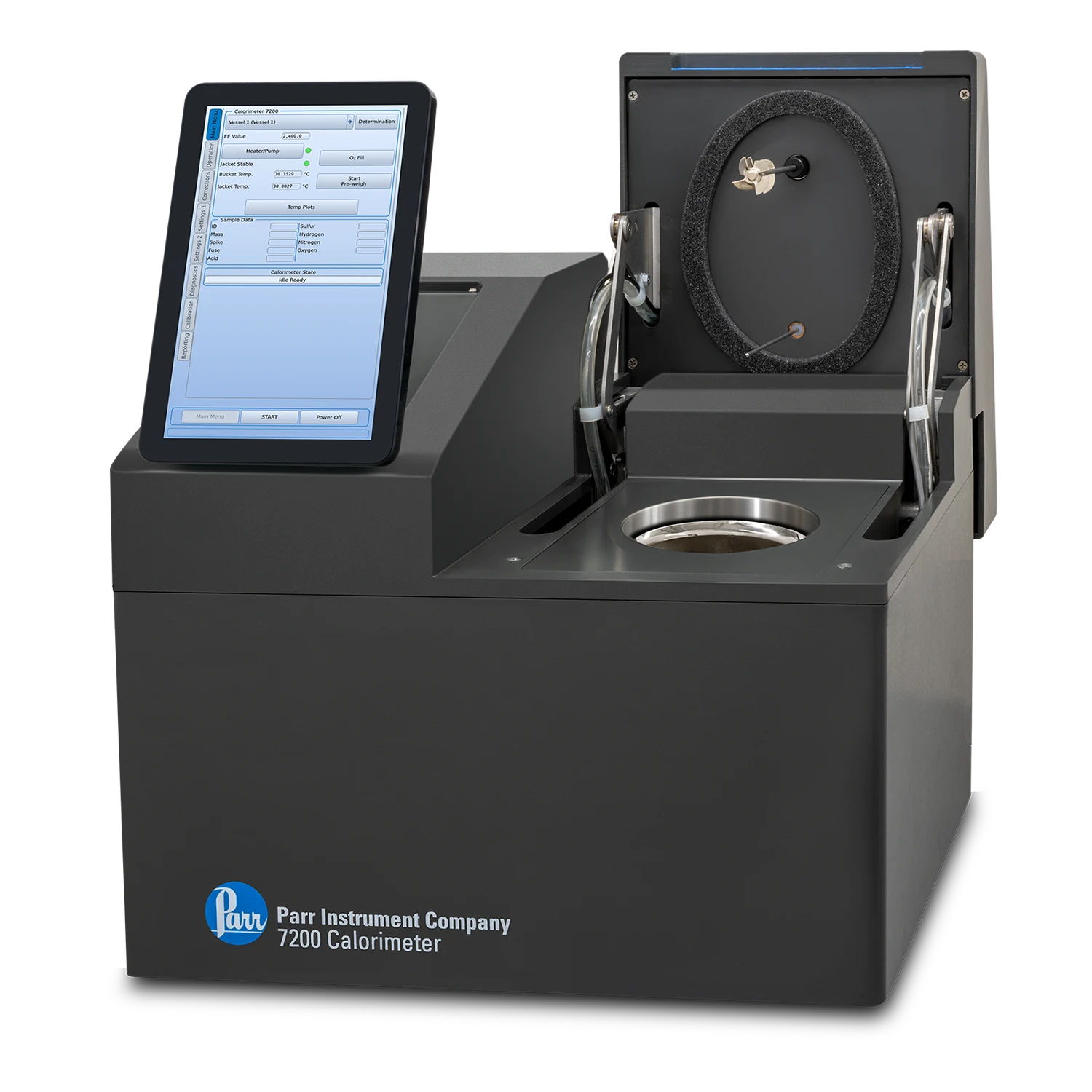
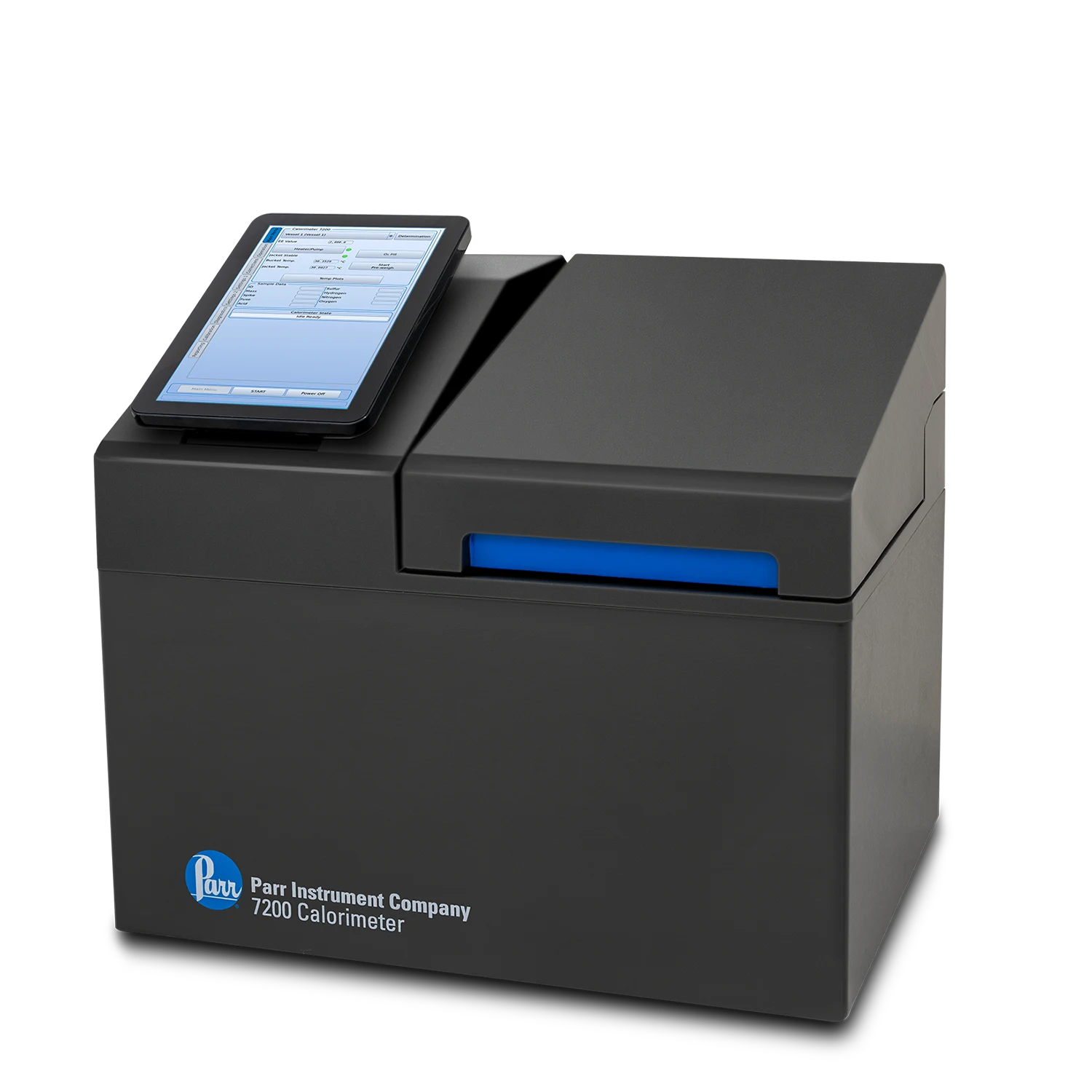
The Parr 7200 Precision Isoperibol Calorimeter is intended for laboratories that value close control of the combustion procedure. It retains a removable oxygen combustion vessel and bucket, which technicians can access, inspect and prepare between tests.
Parr classifies the instrument at 0.05–0.10% precision, depending on the configuration and test conditions, making it a particularly relevant option for R&D, investigative work and routine quality assurance where adaptable methods are important.
The standard 1108 vessel accommodates many established combustion tests, while alternative compatible vessel types extend the potential energy range. Parr lists configurations covering 52 to 12,000 calories per test, but those limits apply only with the appropriate specialist vessel selected.
The 1109A semi-micro vessel supports the low end and the 1104 high-strength vessel the upper end. These are not default capabilities of every supplied 7200 package. SciMed can help determine which vessel, accessories and sample-preparation method are appropriate before quotation.
Parr 7200: flexibility and precision
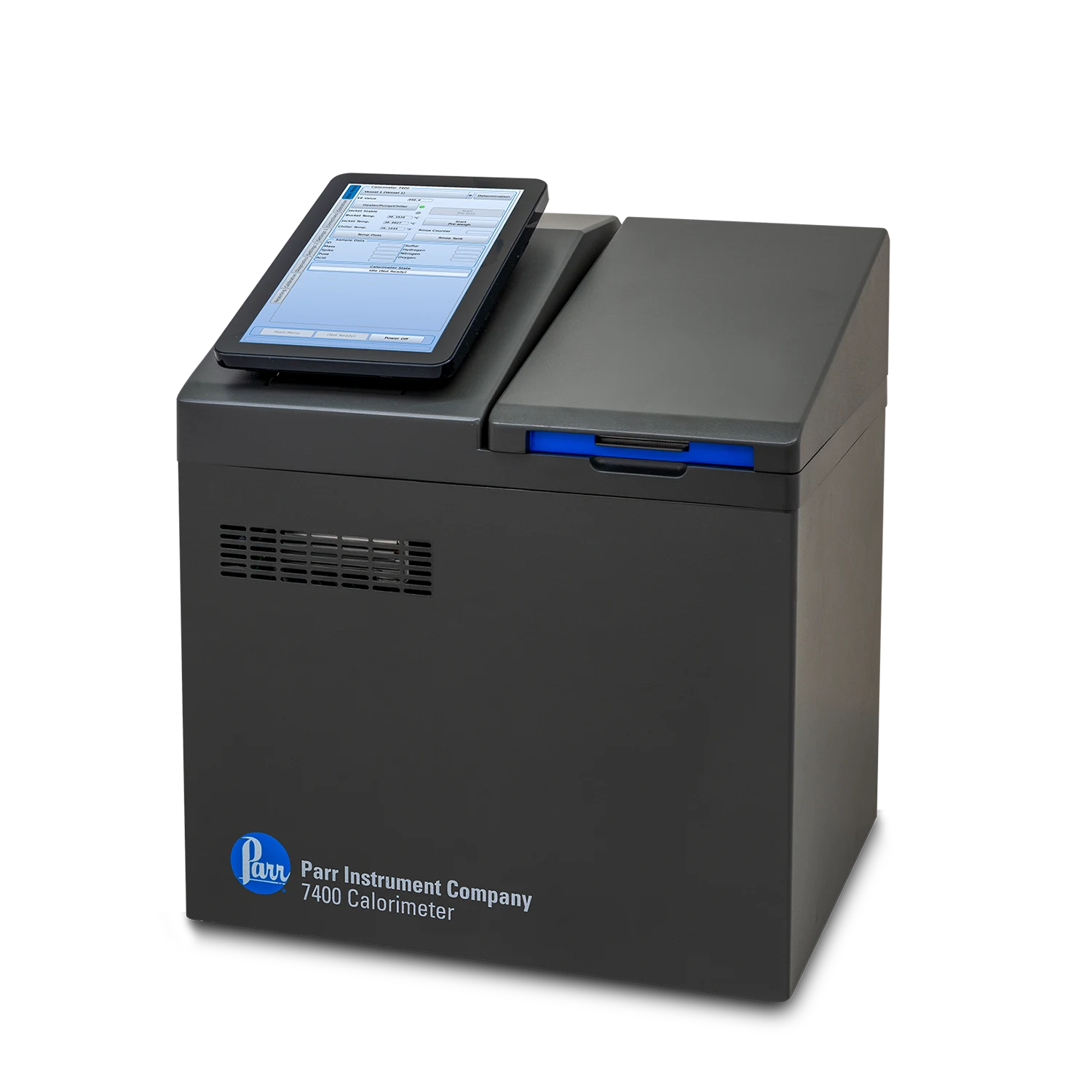
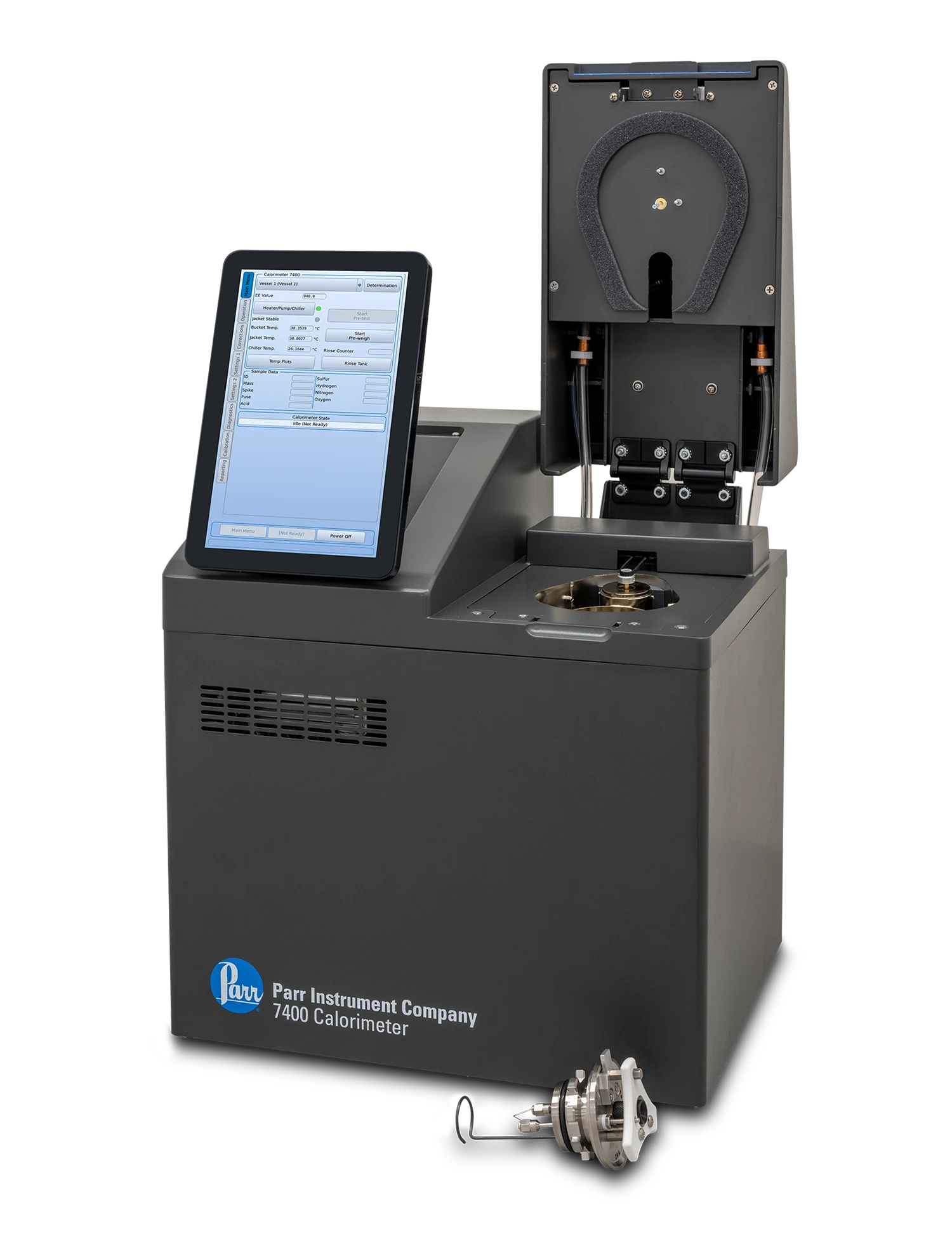
The Parr 7400 Automatic Isoperibol Calorimeter is designed around an integrated vessel-and-bucket configuration. Routine operations, including bucket filling, oxygen charging, gas release, vessel rinsing and cooling, are automated.
Its 1138 combustion vessel uses a Quick Twist-Lock head to make sample loading more efficient. An internal, closed-loop cooling subsystem is built into the instrument, reducing the need for a separate chiller associated with some other calorimeter installations.
For a laboratory processing repeat samples throughout a shift, these functions can reduce operator handling and help standardise the test sequence. Parr specifies approximately one minute of operator time per run and six to seven tests per hour for the 7400.
These figures are manufacturer specifications rather than a guarantee of actual production capacity; sample preparation, cleaning needs, staffing, accessories and method requirements all affect day-to-day output. The 7400’s 0.10% precision classification is intended for demanding routine calorific value measurements.
Parr 7400: greater routine automation
Both calorimeters introduce a tilting, 10-inch high-resolution touchscreen, replacing the four-inch display used in the previous 6000 series generation. The enlarged display is intended to make menu navigation and information review easier for users working at different bench heights.
A revised software platform and upgraded processor support faster navigation, while the system can remember information for up to eight vessels. The 7200 has also been reduced to approximately 43 cm wide, an important consideration for laboratories managing limited bench space.
A more practical interface for busy labs
Gross calorific value testing is used in coal and coke laboratories, biomass and solid biofuel testing, petroleum and fuel evaluation, waste-to-energy operations, as well as selected food, feed and materials research projects.
For instance, an RDF or SRF laboratory may want rapid, repeatable energy measurements across batches. A research laboratory working with unusual specimens may instead prefer the access and vessel flexibility of the 7200. Neither choice should be made on samples per hour alone: unusual matrices, ash content, chlorine-containing compounds and required corrections can influence the recommended vessel and workflow.
Combustion of samples containing significant chlorine or halogen compounds may require a more corrosion-resistant vessel material. Parr offers 1108CL chlorine resistant bomb option for the 7200 and the 1138CL chlorine resistant bomb option for the 7400.
Vessel suitability must be checked against the sample chemistry, expected energy release and relevant procedure. Specialist high-energy or non-standard test atmospheres particularly require technical assessment rather than assuming that every vessel is interchangeable.
Matching the instrument to the sample
The relevant testing method depends on sample type and customer requirements. Commonly referenced methods include ISO 1928 for coal and coke, ISO 18125 for solid biofuels, ISO 21654 for solid recovered fuels and ASTM D240 for certain liquid fuels.
These examples indicate application areas; they do not mean that either instrument, every vessel configuration or any specific laboratory method is automatically accredited or compliant. Laboratories should confirm current standard editions, validation requirements, uncertainty budgets and accreditation scope with their quality team and SciMed.
Parr’s controller supports standardisation and measurement workflows, together with connection options for reporting or peripheral devices. When replacing an existing 6200 or 6400 calorimeter, the new models preserve familiar combustion-vessel principles and Parr calculation approaches.
Even so, laboratories should assess any method change, re-standardisation, correlation testing and documentary requirements as part of their normal quality-control process.
Measurement standards and laboratory quality
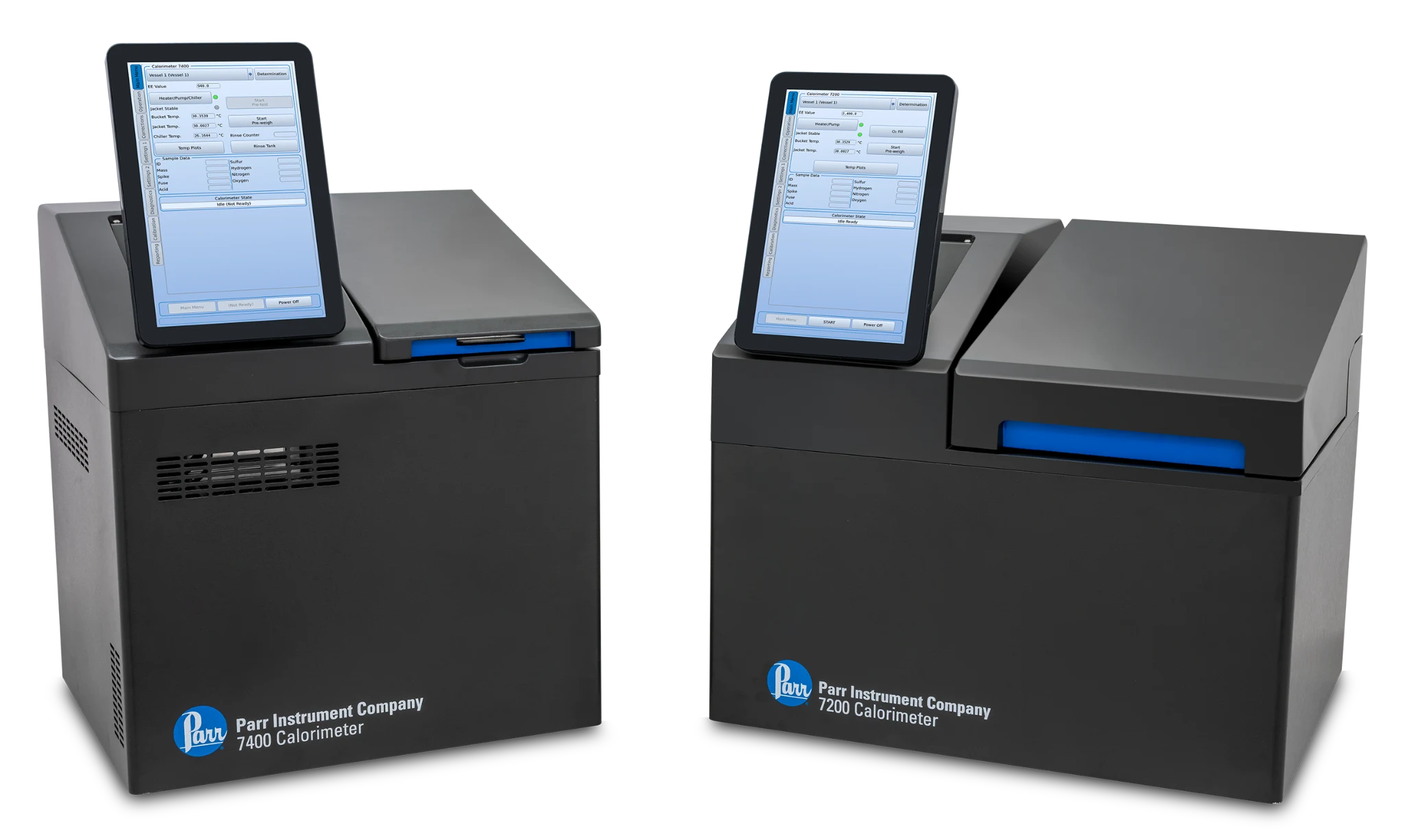
Model Comparison: Parr 7200 vs 7400
Specification / feature | Parr 7200 | Parr 7400 |
Model type | Precision isoperibol | Automatic isoperibol |
Primary benefit | Precision and vessel flexibility | Automation and reduced operator handling |
Operator time per test | Approx. 6 minutes | Approx. 1 minute |
Tests per hour | 4–8, as equipped | 6–7 |
Precision classification | 0.05–0.10% | 0.10% |
Vessel and bucket | Removable | Fixed; removable vessel head |
Oxygen filling | Automatic sequence; manual connector | Automatic |
Bucket fill / wash | Manual / manual | Automatic / automatic |
Temperature resolution | 0.0001 °C | 0.0001 °C |
Dimensions (W × D × H) | 43 × 43 × 46 cm | 42 × 40 × 49 cm |
Connectivity | USB, Ethernet TCP/IP | USB, Ethernet TCP/IP |
Combustion vessels | 1108P standard; compatible options | 1138 standard; 1138CL option |
"The Parr 7200 and 7400 Oxygen Bomb Calorimeters deliver precise calorific
value analysis, combining testing flexibility with advanced automation."
Applications
Application Note 1
Application Note 2
Application Note 3
Contact Us Today
We take great pleasure in assisting you and ensuring you get a prompt response to your questions
Live chat opening hours Mon – Fri 9:15 to 16:30 (UK Time)