
SciMed Education
XRF Analysis in the Cement Industry: Advanced Elemental Analysis for Quality Control and Process Optimisation
Introduction
X-ray fluorescence (XRF) analysis has become a foundational analytical technique across the cement industry, supporting elemental analysis requirements from quarry characterisation and raw meal optimisation through to clinker production, finished cement quality control, and environmental compliance. For cement laboratories operating under increasingly stringent production, efficiency, and regulatory pressures, XRF provides a uniquely effective balance of analytical speed, precision, operational simplicity, and low cost per sample.
Modern cement manufacturing depends on continuous compositional control of major oxides, minor constituents, and trace elements that directly influence kiln stability, clinker phase development, product performance, and emissions management. Wavelength dispersive XRF (WDXRF) and energy dispersive XRF (EDXRF) systems are widely adopted because they enable rapid multi-element analysis with minimal sample preparation while supporting both routine process control and standards-based compliance testing.
This page explores the role of XRF spectroscopy in cement analysis, including the scientific principles behind the technique, practical implementation considerations, the comparative strengths of WDXRF and EDXRF, and the applications where XRF delivers measurable value across cement production workflows.
The Role of XRF in Cement Production and Quality Assurance
Chemical composition is central to cement manufacturing. Variations in silica, alumina, iron oxide, lime saturation, alkali content, sulfur, chlorine, and trace contaminants can significantly affect clinker mineralogy, kiln efficiency, setting behavior, mechanical strength, and long-term durability.
As a result, cement laboratories require analytical methods capable of delivering:
• High-throughput elemental analysis
• Excellent repeatability and reproducibility
• Reliable light element sensitivity
• Multi-element quantification across broad concentration ranges
• Compatibility with powders, fused beads, pressed pellets, solids, and liquids
• Robust operation in demanding industrial environments
XRF analysis aligns particularly well with these requirements because it is inherently suited to oxide chemistry determination and routine industrial process control. In most cement facilities, XRF forms the analytical backbone for:
• Raw material characterisation
• Raw meal proportioning
• Kiln feed optimisation
• Clinker chemistry control
• Cement product certification
• Alternative fuel and supplementary cementitious material analysis
• Environmental and regulatory monitoring
Compared with classical wet chemistry techniques, XRF dramatically reduces analytical turnaround time while minimising reagent consumption, operator dependency, and hazardous chemical handling.

Principles of XRF Analysis in Cement Applications
XRF spectroscopy is based on the interaction between primary X-rays and the atoms within a sample matrix. When irradiated with X-rays, atoms emit secondary fluorescent X-rays at characteristic energies/wavelengths corresponding to specific elements. Measuring the intensity of these emitted signals enables quantitative elemental analysis.
In cement analysis, XRF is commonly used to quantify major oxides including:
• SiO₂ • MgO • TiO₂
• CaO • S0₃ • K₂O
• Al₂O₃ • Na₂O
• Fe₂O₃ • P₂O₅

Trace-level and minor constituents such as chlorine, manganese, zinc, and heavy metals may also be determined depending on instrument configuration and analytical requirements.
Because cement matrices are compositionally complex and often contain substantial mineralogical variation, calibration strategy and matrix correction algorithms are critical to achieving high analytical accuracy. Laboratories typically employ certified reference materials (CRMs), empirical alpha corrections, fundamental parameters methods, or hybrid calibration approaches to compensate for inter-element effects and matrix absorption/enhancement phenomena.
In practical cement laboratory workflows, XRF measurements are generally performed on:
• Pressed powder pellets
• Fused glass beads
• Solid clinker fragments
• Powdered raw materials
• Slurries and liquid process samples where applicable
Pressed pellet methods remain particularly attractive for high-throughput routine process control because they provide rapid sample preparation with relatively low operational cost.
Why XRF Is Widely Adopted in Cement Laboratories
Rapid Analytical Turnaround
Speed remains one of the primary reasons for widespread XRF adoption in cement production environments. Modern XRF spectrometers can quantify multiple elements simultaneously or sequentially within minutes, enabling near real-time process control decisions.
In kiln operations, rapid compositional feedback supports tighter control of:
• Lime saturation factor (LSF)
• Silica modulus (SM)
• Alumina modulus (AM)
• Alkali balance
• Sulfur cycles
• Chlorine loading
Reducing analytical delays directly improves process stability and minimises off-specification production. Compared with traditional wet chemistry workflows, XRF substantially reduces total analysis time while maintaining excellent analytical precision.
Application work performed using pressed powder methods on benchtop and floor-standing WDXRF systems has demonstrated complete cement raw meal analyses within only a few minutes per sample while maintaining low relative standard deviations across major oxides.
Detailed application notes and supporting data can be provided on request.
Simultaneous Multi-Element Detection
Unlike single-analyte wet chemistry methods, XRF enables simultaneous or near-simultaneous measurement of multiple elements from a single preparation.
This capability is especially valuable in cement manufacturing because process control depends on relationships between numerous oxide concentrations rather than isolated analytes. XRF therefore supports integrated compositional monitoring across the full process stream.
A single measurement can provide quantitative information for:
• Major oxides
• Minor oxides
• Alkalis
• Sulfur compounds
• Chlorides
• Trace contaminants
The ability to acquire comprehensive chemical profiles from one analysis reduces laboratory workload while improving data consistency.
Minimal Sample Preparation Requirements
XRF sample preparation is fairly straightforward relative to many alternative analytical techniques. Cement laboratories commonly employ:
Pressed Powder Pellets:
Pressed pellet preparation involves grinding the sample to a controlled particle size, optionally blending with a binder, and compacting into a pellet or aluminium ring. This method is widely used for routine cement and raw meal analysis because it is rapid, economical, and well suited to high sample throughput.
Published application work using pressed powder methods has demonstrated excellent repeatability for cement raw meal and Portland cement analysis using WDXRF instrumentation.

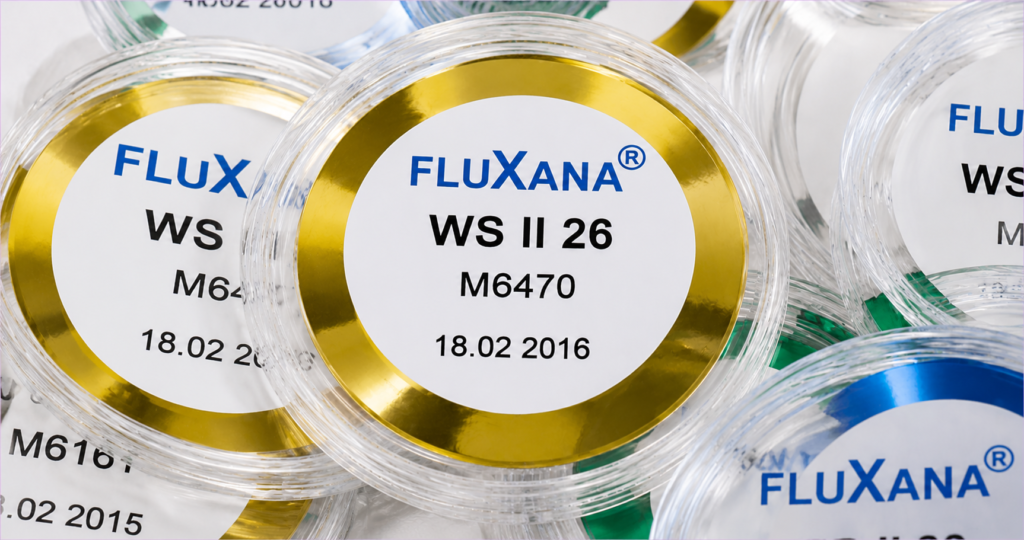
Fused Beads:
Fusion methods provide superior matrix homogenization and reduced mineralogical effects, making them valuable for high-accuracy major oxide determination and standards-based certification workflows. Although fusion introduces additional preparation time and consumable cost, it can improve analytical robustness for complex matrices.
Direct Solid Analysis:
Certain clinker fragments, refractories, and solid materials can also be analyzed directly with limited preparation, particularly when screening or troubleshooting process conditions.
Non-Destructive Elemental Analysis
XRF is fundamentally non-destructive. Samples generally remain intact after analysis, allowing:
• Archiving for traceability
• Repeat analysis
• Cross-technique validation
• Retention for regulatory audits
• Additional mineralogical or microscopic examination
This characteristic is particularly useful in quality assurance laboratories where retained reference materials and dispute resolution samples may need to be re-evaluated.
Low Cost Per Sample
Once installed, XRF systems offer relatively low operational cost compared with many wet chemical or spectroscopic techniques requiring extensive consumables, acids, gases, or complex digestion workflows.
The economic advantages become especially significant in high-throughput cement plants processing hundreds of routine QC samples daily. Reduced reagent use, simplified preparation, and automation compatibility contribute to lower cost per analysis while supporting consistent laboratory productivity.
WDXRF vs EDXRF for Cement Analysis
Both wavelength dispersive XRF and energy dispersive XRF are used within the cement industry, although their analytical roles differ depending on laboratory requirements, throughput demands, and sensitivity expectations.
WDXRF for Cement Analysis
Wavelength dispersive XRF is generally considered the reference standard for high-performance cement elemental analysis because of its superior spectral resolution, precision, and light element sensitivity.
WDXRF systems separate emitted X-rays using diffraction crystals before detection. This optical separation minimizes spectral overlap and enables highly accurate quantification even in complex matrices.
For cement laboratories, WDXRF offers several advantages:
• High precision for major oxides
• Excellent repeatability
• Improved detection of light elements such as Na, Mg, Al, Si, S, and Cl
• Reduced peak overlap
• Strong long-term calibration stability
• High suitability for standards-based methods and certification
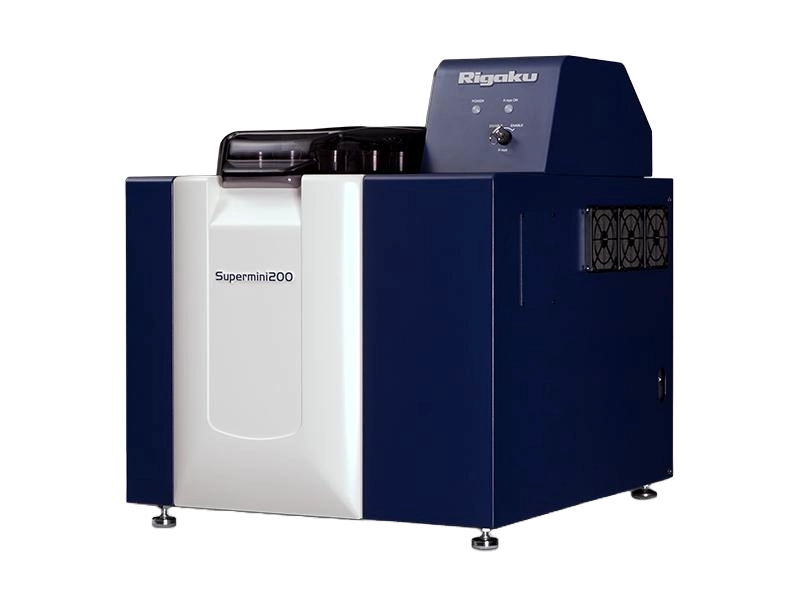
These characteristics make WDXRF particularly valuable for clinker chemistry control, kiln feed optimization, and ASTM-compliant cement testing.Application studies using sequential WDXRF instrumentation have demonstrated strong performance for cement raw meal and Portland cement analyses using pressed powder methodologies, including compliance with ASTM C114 requirements for hydraulic cement analysis.Rigaku WDXRF platforms used in cement laboratories include benchtop systems such as the Supermini 200 series as well as higher-throughput floor-standing instruments including the ZSX Primus series, which are optimized for routine industrial powder analysis and demanding process-control environments.

EDXRF for Cement Analysis
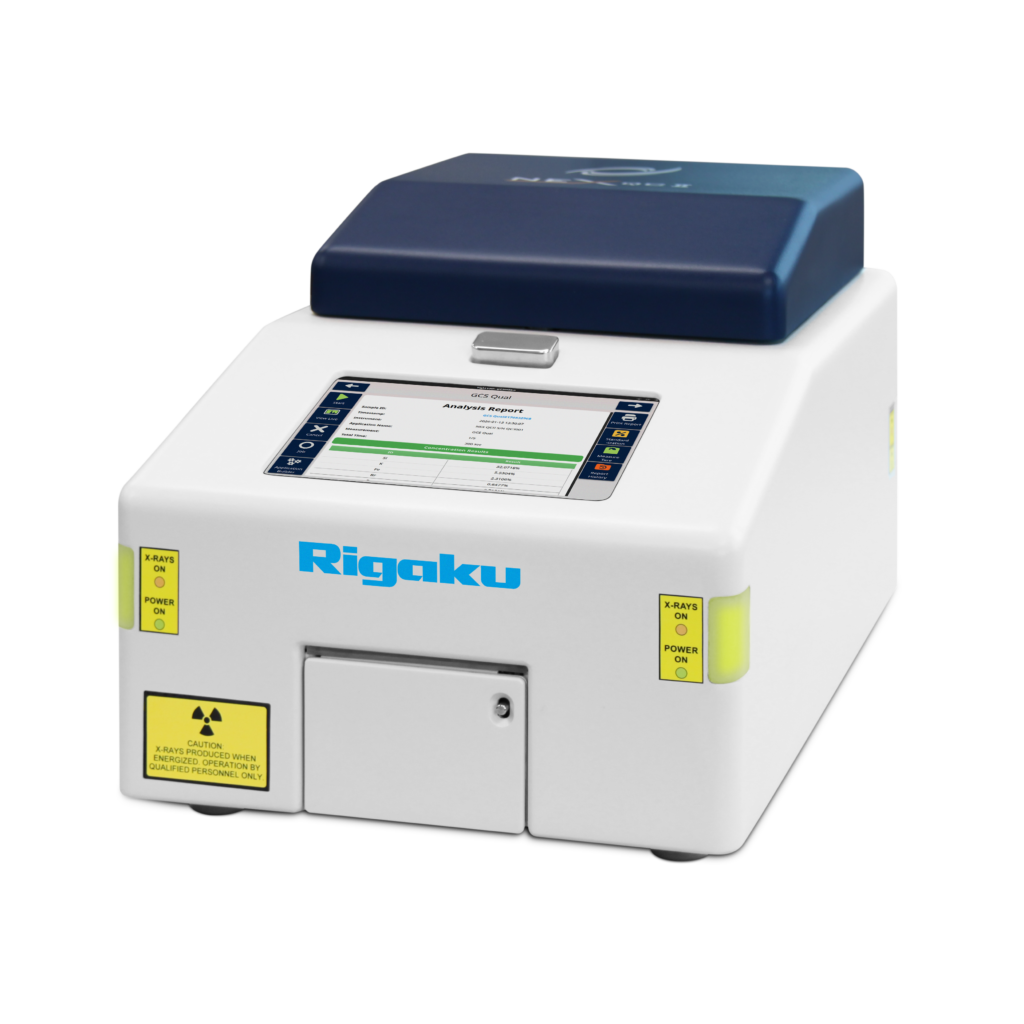
Energy dispersive XRF systems measure emitted X-rays directly according to energy rather than wavelength separation. EDXRF instruments are typically more compact and may provide advantages in portability, simplified operation, or lower initial capital cost.
In cement applications, EDXRF can be effective for:
• Screening analysis
• Incoming raw material inspection
• Field-based elemental verification
• Alternative fuel characterization
• Rapid qualitative or semi-quantitative measurements
However, compared with WDXRF, EDXRF generally exhibits:
• Lower spectral resolution
• Greater susceptibility to peak overlap
• Reduced sensitivity for light elements
• Lower precision in demanding quantitative applications
For this reason, high-throughput cement production laboratories often favor WDXRF when stringent process control or regulatory compliance requirements are involved.


Applications of XRF Across the Cement Production Process
Raw Material Characterisation
Cement production begins with careful control of limestone, clay, shale, sand, iron-bearing materials, and supplementary feedstocks. Variability in raw materials directly affects kiln stability and clinker phase composition.
XRF analysis supports rapid compositional profiling of quarry materials and incoming feedstocks, enabling:
• Blend optimization
• Quarry mapping
• Stockpile management
• Variability reduction
• Trace contaminant monitoring
Routine monitoring of silica, alumina, iron, calcium, magnesium, sulfur, and alkali content allows tighter process control before materials enter the kiln system.
Advanced WDXRF systems designed for powder analysis may incorporate features such as tube-above optics, pre-evacuation chambers, and contamination-control mechanisms to improve operational reliability in dusty industrial environments.
Clinker and Finished Cement Analysis
Clinker chemistry determines the hydraulic behavior and performance characteristics of finished cement products.
XRF is routinely used to monitor:
• Free lime trends
• Alkali content
• Sulfur balance
• Minor element concentrations
• Cement blending consistency
• Product certification parameters
Portland cement analysis frequently follows recognised standards such as ASTM C114 for hydraulic cement chemical analysis.
Demonstrated XRF workflows using certified reference materials have shown compliance with ASTM C114 analytical requirements while maintaining strong repeatability and calibration performance across key cement analytes.
Alternative Fuels and Secondary Raw Materials
The growing use of alternative fuels and supplementary cementitious materials has increased the need for rapid elemental screening.
XRF supports compositional analysis of:
• Fly ash
• Slag
• Biomass ash
• Refuse-derived fuel
• Waste-derived feedstocks
• Industrial by-products
Monitoring chlorine, sulfur, alkalis, and trace metals is essential for preventing kiln buildup, emissions excursions, refractory damage, and product variability.
Environmental and Regulatory Compliance
Environmental oversight within the cement industry continues to intensify, particularly regarding emissions, waste utilization, and trace contaminant management.
XRF contributes to regulatory compliance workflows by supporting analysis of:
• Heavy metals
• Sulfur-containing materials
• Chlorine-bearing compounds
• Waste-derived feedstocks
• Dust and particulate materials
The technique’s ability to rapidly quantify multiple regulated elements with minimal consumable use makes it well suited to continuous compliance-oriented laboratory operations.
Industry laboratories commonly align XRF workflows with recognized regulatory and standards frameworks including ASTM methods, ISO guidance, national reference material programs, and published industrial analytical protocols.
Analytical Performance Considerations in Cement XRF
Light Element Sensitivity
Cement matrices require accurate determination of light elements including sodium, magnesium, aluminium, silicon, sulfur, and chlorine. These elements can be analytically challenging due to low fluorescence energies and absorption effects.
WDXRF systems equipped with optimised optics, vacuum environments, and multilayer analysing crystals provide significantly improved sensitivity for these analytes relative to many EDXRF configurations.
Published cement application studies using Rigaku WDXRF systems have specifically highlighted strong sensitivity and repeatability for Na, Mg, S, and Cl determination in pressed powder samples.
Matrix Effects and Calibration Strategy
Matrix effects remain a critical consideration in quantitative cement XRF analysis. Variations in mineralogy, particle size distribution, density, and elemental composition can influence measured fluorescence intensities.
• Robust calibration strategies typically include:
• Certified reference materials
• Matrix-matched standards
• Fundamental parameter corrections
• Empirical alpha corrections
• Drift monitoring protocols
Well-designed calibration routines are essential for maintaining long-term analytical accuracy in high-throughput industrial laboratories.


Repeatability and Instrument Stability
Cement process control requires analytical systems capable of stable long-term operation under continuous production conditions.
Published repeatability testing for cement raw meal and Portland cement using modern WDXRF instrumentation has demonstrated excellent short-term precision with low standard deviations across major oxides and minor constituents.
This level of stability is critical for minimizing process variability and ensuring confidence in automated control decisions.
Summary: XRF as a Strategic Analytical Platform for Cement Laboratories
For modern cement producers, XRF is more than a routine analytical tool—it is a strategic process-control technology that directly influences operational efficiency, product consistency, and regulatory performance.
Its combination of:
• Rapid elemental analysis
• Multi-element capability
• Non-destructive testing
• Minimal sample preparation
• High throughput
• Low cost per sample
• Strong repeatability
• Compatibility with industrial automation
Makes XRF uniquely suited to the analytical demands of cement manufacturing.
Whether implemented as a benchtop WDXRF system for routine plant control or as a high-performance floor-standing platform for advanced laboratory operations, XRF continues to play a central role in cement quality assurance, raw material optimization, and compliance-driven analysis.
As cement production evolves toward greater sustainability, increased alternative fuel usage, and tighter emissions regulation, the importance of rapid, robust elemental analysis will continue to grow. XRF spectroscopy remains one of the most effective and widely adopted technologies for meeting these analytical challenges across the cement industry.
What to do Next?
Looking to improve cement quality control, raw material analysis, or kiln optimisation workflows? SciMed can help you identify the right XRF solution for your laboratory, from routine process control through to advanced elemental analysis applications.
Contact the SciMed team today to discuss your cement analysis requirements and explore our range of WDXRF and EDXRF systems.
Page FAQ's
XRF analysis is used throughout the cement production process to measure elemental and oxide composition in raw materials, raw meal, clinker, finished cement, alternative fuels, and supplementary cementitious materials. It supports quality control, kiln optimisation, regulatory compliance, and process stability.
WDXRF offers higher analytical precision, improved light element sensitivity, and superior spectral resolution, making it ideal for demanding quantitative cement analysis and process control. EDXRF systems are typically more compact and cost-effective, making them suitable for screening applications, rapid inspection, and semi-quantitative analysis.
Fused bead preparation helps minimise mineralogical and particle size effects by creating a homogeneous glass sample. This improves analytical accuracy and repeatability, particularly for major oxide determination and standards-based certification workflows.
- Yes. XRF is widely used to analyse alternative fuels, fly ash, slag, biomass ash, refuse-derived fuels, and other secondary raw materials. It enables rapid monitoring of chlorine, sulfur, alkalis, heavy metals, and trace contaminants that may impact kiln performance, emissions, or product quality.
Contact Us Today
We take great pleasure in assisting you and ensuring you get a prompt response to your questions
Live chat opening hours Mon – Fri 9:15 to 16:30 (UK Time)