
SciMed Education
XRF Analysis in Food and Animal Feed for Safety, Quality, and Compliance
Introduction
XRF analysis in food safety and animal feed testing has become an increasingly valuable tool for laboratories seeking rapid, reliable, and cost-effective elemental analysis. X-ray fluorescence (XRF) enables multi-element detection across a wide range of matrices with minimal sample preparation, supporting both high-throughput quality control and regulatory compliance workflows.
For laboratories already operating ICP-OES or ICP-MS systems, XRF food testing offers a complementary or alternative approach that significantly reduces analysis time and operational overhead while maintaining robust analytical performance.
Principles of X-ray Fluorescence in Food and Feed Analysis
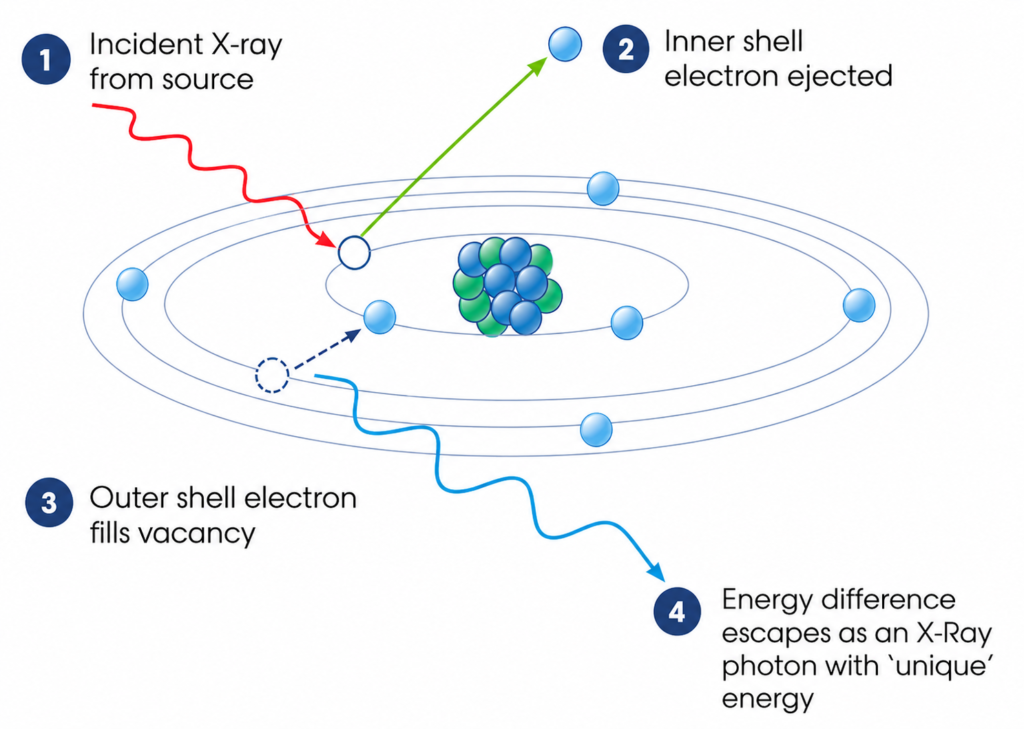
X-ray fluorescence is a non-destructive analytical technique based on the interaction between incident X-rays and the atoms within a sample. When a primary X-ray beam irradiates a food or feed matrix, inner-shell electrons are ejected, and the resulting electron transitions produce element-specific secondary (fluorescent) X-rays. These emissions are detected and quantified to determine elemental composition.
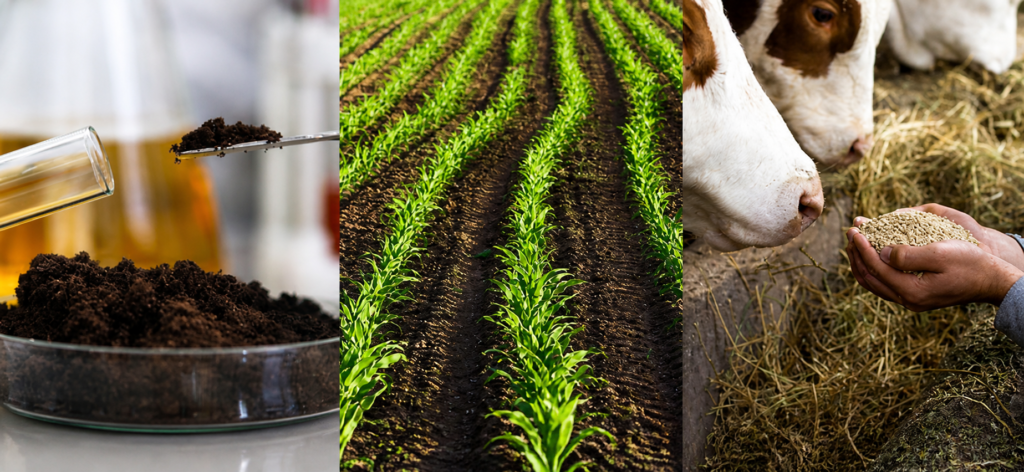
In the context of food and animal feed, matrices typically include complex combinations of organic components (proteins, lipids, carbohydrates) alongside inorganic elements such as minerals and trace contaminants. XRF is inherently well-suited to this environment because it directly measures elemental composition without requiring digestion or chemical transformation.
Matrix effects—particularly absorption and enhancement phenomena—are managed through calibration strategies such as fundamental parameters (FP), empirical calibrations, or the use of matrix-matched standards. For experienced laboratories, these approaches integrate seamlessly into existing quality assurance frameworks.
Why Use XRF for Food Safety and Feed Analysis?
Speed and Throughput
One of the most compelling advantages of XRF food testing is analytical speed. Measurements are typically completed in minutes, enabling high-throughput screening of raw materials, intermediates, and finished products. This is particularly valuable in production environments where rapid decision-making is essential.
Non-Destructive Testing
XRF analysis preserves sample integrity, allowing for re-analysis, archival storage, or complementary testing using other techniques. This is advantageous in regulated environments where sample traceability and retention are required.
Minimal Sample Preparation
Unlike wet chemical methods, XRF generally requires only simple preparation steps such as grinding, homogenisation, or pelletising. For many applications, loose powders or liquids can be analysed directly. This reduces potential sources of error and significantly lowers labour requirements.
Multi-Element Detection
X-ray fluorescence food and feed analysis enables simultaneous detection of a wide range of elements—from major constituents (e.g., Ca, K, P) to trace contaminants (e.g., Pb, Cd, As, Hg). This multi-element capability eliminates the need for multiple analytical runs and methods.
Cost Efficiency
The cost-per-sample for XRF is typically lower than techniques requiring consumables such as acids, gases, or plasma sources. Reduced maintenance and simplified workflows contribute to long-term operational efficiency.
Suitability for Routine QC and Regulatory Compliance
XRF is increasingly used for both screening and quantitative analysis in regulated environments. Its reproducibility and robustness make it suitable for routine quality control, while validated methods can support compliance with international food safety standards
Key Applications of XRF in Food and Animal Feed
Heavy Metal Detection in Food Using XRF
Heavy metal contamination remains a critical concern in food safety. XRF enables rapid screening and quantification of toxic elements such as Lead (Pb), Cadmium (Cd), Arsenic (As), and Mercury (Hg).
In practice, XRF is often used as a front-line screening tool to identify samples exceeding regulatory thresholds. Suspect samples can then be confirmed using techniques such as ICP-MS or ICP-OES where necessary. This tiered approach optimises laboratory efficiency while maintaining compliance with stringent safety requirements.
Mineral Content Verification
Accurate determination of essential minerals—including calcium, phosphorus, magnesium, potassium, and iron—is vital for nutritional labeling and formulation control. XRF provides reliable quantification of these elements across diverse food and feed matrices, supporting both product development and regulatory labeling requirements.
Contaminant and Adulterant Detection
Beyond heavy metals, XRF can detect inorganic contaminants introduced during processing, handling, or environmental exposure. This includes elements associated with soil contamination, equipment wear, or packaging interactions.
Raw Material Incoming Quality Control
In feed production and food manufacturing, raw material variability can significantly impact product quality. XRF allows rapid verification of elemental composition at the point of receipt, enabling immediate acceptance or rejection decisions.
Finished Product Release Testing
For final product verification, XRF supports batch release by confirming compliance with internal specifications and regulatory limits. Its speed and reproducibility make it well-suited to high-throughput production environments.

WD-XRF vs ED-XRF in Food and Feed Analysis
Both wavelength-dispersive XRF and energy-dispersive XRF are used in food and feed applications, each offering distinct advantages.

Wavelength-Dispersive XRF (WD-XRF)
WDXRF systems provide superior spectral resolution and sensitivity, particularly for trace-level analysis and complex matrices. This makes them highly suitable for laboratories requiring precise quantification of low-concentration elements or operating under strict regulatory frameworks.
WDXRF is often preferred for:
• Trace heavy metal quantification
• Complex or variable matrices
• High-precision laboratory environments
Energy-Dispersive XRF (ED-XRF)
EDXRF systems offer faster analysis times and simpler operation, with compact instrument designs that are well-suited to routine quality control environments. Advances in detector technology have significantly improved their performance, making them viable for many food testing applications.
EDXRF is commonly used for:
• Rapid screening of contaminants
• Routine QC in production settings
• Multi-element analysis with minimal setup
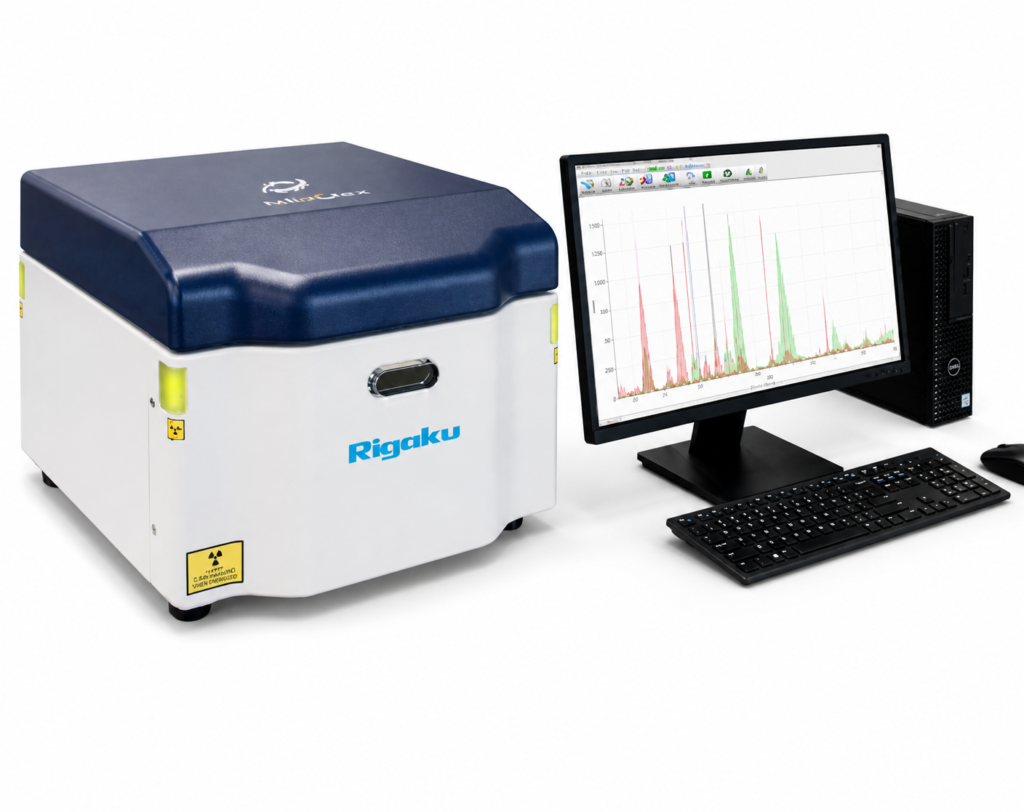
Both techniques are supported by modern instrumentation platforms, including those developed by Rigaku, which are widely implemented in food and feed laboratories for their reliability and analytical performance.
What About Matrix Compatibility: Solids, Powders, and Liquids?
XRF demonstrates strong versatility across different food and feed sample types:
• Solid samples: grains, processed foods, feed pellets—typically analyzed after grinding and pelletizing
• Powdered materials: flours, premixes, additives—often analyzed directly or with minimal preparation
• Liquid samples: oils, beverages, and liquid feeds—analyzed using specialized sample cups or cells
This flexibility enables laboratories to standardize analytical workflows across diverse product lines.
Regulatory Frameworks and Compliance
In the United Kingdom, XRF analysis in food safety and animal feed testing operates within a regulatory framework largely derived from retained EU legislation, with oversight from national authorities.
Maximum levels for contaminants such as lead (Pb), cadmium (Cd), and mercury (Hg) are enforced under UK law and monitored by the Food Standards Agency (FSA) and Food Standards Scotland (FSS). For animal feed, limits on undesirable substances are defined within UK feed safety regulations.
Laboratories must demonstrate analytical competence through accreditation to ISO/IEC 17025, typically via UKAS (United Kingdom Accreditation Service). Within this framework, XRF food testing is widely used for rapid screening, routine quality control, and process monitoring.
While confirmatory techniques may be required for regulatory reporting, X-ray fluorescence food and feed analysis provides an efficient, defensible approach for ensuring compliance across the supply chain.
Conclusion: The Role of XRF in Modern Food and Feed Testing
X-ray fluorescence food and feed analysis has evolved into a mature, reliable technique that addresses many of the challenges faced by today’s analytical laboratories.
From heavy metal detection in food using XRF to mineral verification and contaminant screening, the technique provides a balance of speed, accuracy, and operational efficiency.
As regulatory expectations continue to tighten and production demands increase, XRF stands out as a practical and scientifically robust solution for elemental analysis in food safety and animal feed quality control.
What to do Next?
If you’re considering XRF for food safety or animal feed analysis, the next step is to assess how it fits within your current laboratory workflow. Whether you need rapid screening, routine QC, or support for regulatory compliance, selecting the right configuration is key.
Explore our range of XRF solutions or speak directly with a SciMed product specialist to discuss your application, sample types, and performance requirements. Our team can help you identify the most suitable system and support method development, calibration, and integration into your existing analytical processes.
Page FAQ's
XRF can detect a wide range of elements, from major nutrients such as calcium, potassium, and phosphorus to trace contaminants including lead, cadmium, arsenic, and mercury. This makes it suitable for both nutritional analysis and food safety screening.
XRF provides highly reliable and reproducible results for screening and routine quality control. While it is widely used for compliance monitoring, confirmatory techniques such as ICP-OES or ICP-MS may be required for official reporting depending on regulatory requirements.
Sample preparation is minimal compared to other techniques. Most solid samples are simply ground and homogenised, while powders and some liquids can often be analysed directly using sample cups, reducing time and potential errors.
- XRF offers faster analysis, lower operating costs, and minimal sample preparation, making it ideal for high-throughput screening. ICP techniques provide higher sensitivity for trace-level detection, so many laboratories use XRF for rapid screening and ICP methods for confirmation.
Contact Us Today
We take great pleasure in assisting you and ensuring you get a prompt response to your questions
Live chat opening hours Mon – Fri 9:15 to 16:30 (UK Time)