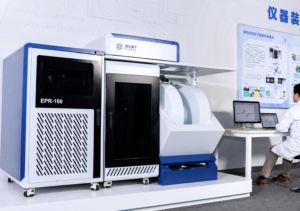
Protected: Electron Paramagnetic Resonance (EPR) Technology in Water Treatment Research
There is no excerpt because this is a protected post.

There is no excerpt because this is a protected post.
There is no excerpt because this is a protected post.

There is no excerpt because this is a protected post.

Learn how EPR spectroscopy detects free radicals to evaluate edible oil oxidation, antioxidant performance, and oil stability in laboratory analysis.

This guide explains how to perform AOX testing in wastewater and effluent samples in line with ISO/FDIS 9562. Learn the four key steps — sample collection, chloride/DOC removal, carbon adsorption, and AOX measurement — using the APUsim and Multi X 2500, with accuracy checks and options for AOF/PFAS analysis.
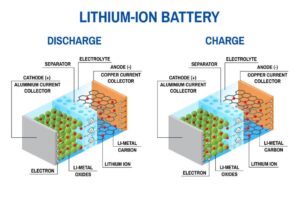
Discover how SEM and EDS techniques are transforming lithium-ion battery development. Explore structural analysis, compositional mapping, and failure detection with SciMed’s advanced SEM systems.
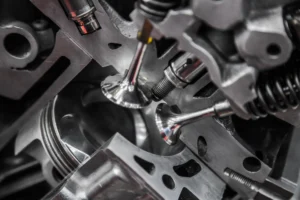
Learn how Scanning Electron Microscopy (SEM) is used in failure analysis across industries, from aerospace to biomedical engineering. Explore detailed workflows and real-world applications.
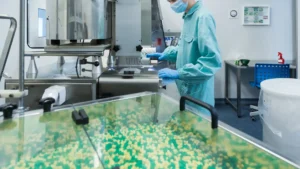
Discover how Energy Dispersive Spectroscopy (EDS) helps determine elemental composition in materials using electron microscopy. Applications span industry, science, and forensic research.

Explore how Scanning Electron Microscopy (SEM) supports industrial applications, from failure analysis and alloy verification to cleanroom monitoring, EBSD, and EDS mapping.
Electron paramagnetic resonance (EPR) spectroscopy can be used to study any material with unpaired electrons, known as paramagnetic materials.