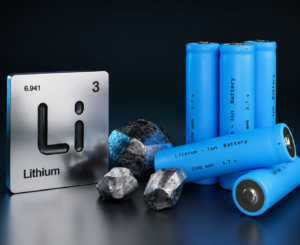
Recycling Lithium‑Ion Batteries – Determining Elemental and Organic Carbon in Black Mass
Learn how the multi EA 4000 determines elemental carbon, total carbon and organically bound carbon in black mass from lithium ion battery recycling.

Learn how the multi EA 4000 determines elemental carbon, total carbon and organically bound carbon in black mass from lithium ion battery recycling.

Learn how dual-electrometer potentiostat measurements enable simultaneous full-cell and half-cell impedance analysis using five-electrode electrochemical setups for advanced battery and electrochemical diagnostics.
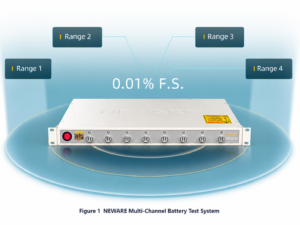
Learn how dQ/dV analysis is used in lithium-ion battery testing to evaluate electrochemical reactions, degradation mechanisms and battery performance.
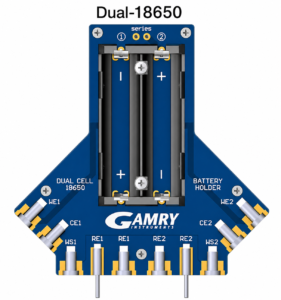
Learn how battery impedance measurement setup affects EIS accuracy. Compare 2 wire vs 4 wire testing and improve ESR measurement reliability.
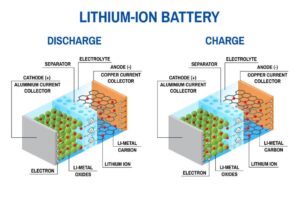
Electron paramagnetic resonance (EPR) spectroscopy can be used to study any material with unpaired electrons, known as paramagnetic materials.

Learn how Field Emission SEM (FE-SEM) improves lithium-ion battery inspection by revealing microstructural defects and supporting better quality control.